
I love Heights and highly recommend checking them out, use the code ALIABDAAL15 (fyi the code on screen was missing an ‘a’) at this link to get your exclusive discount: https://go.aliabdaal.com/heightsprobiotic
📚 Pre-order my book to get an exclusive ticket to The Feel-Good Productivity Annual Planning Workshop! https://www.feelgoodproductivity.com/?utm_campaign=bonus&utm_source=youtube_long&utm_medium=video_description&utm_content=The+Science+of+Gut+Health
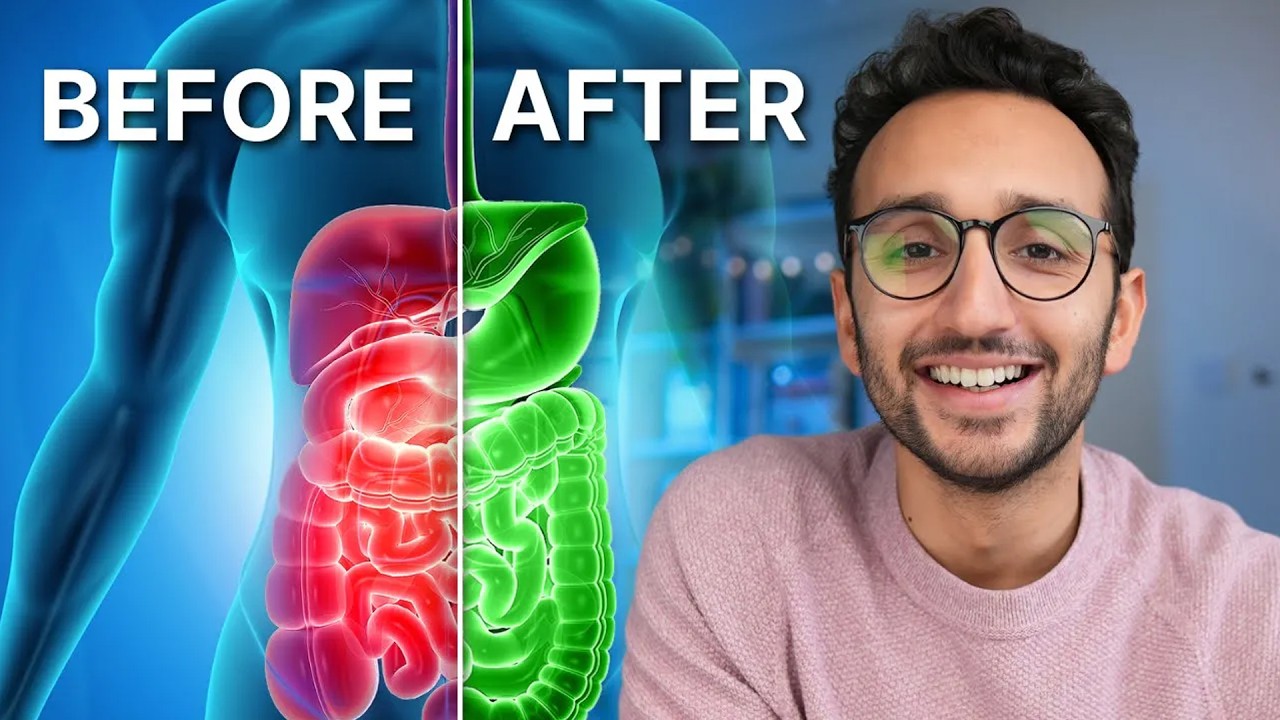
I never used to care about my gut health, but it turns out it’s super important. I recently spoke to Sophie Medlin on my podcast Deep Dive so I wanted to share all the useful advice I picked up from here. So this video is all about the science of gut health and what we can do to look after it. Enjoy x
🎙 Check out the full episode with Sophie here: https://www.youtube.com/watch?v=5zSHaSAcHPo
🍿WATCH NEXT:
How to Optimise Your Brain: https://www.youtube.com/watch?v=n2czIPRE0Nc
My Evidence-Based Sleep Routine: https://www.youtube.com/watch?v=K3eS4jr2pIo
My Evidence-Based Skincare Routine: https://www.youtube.com/watch?v=OrElyY7MFVs
7 Myths Ruining Your Sleep: https://www.youtube.com/watch?v=qlf9-573MhI
⌚️Timestamps:
0:00 Intro
0:55 What is gut health?
1:58 Why does your gut health matter?
4:44 How do I get a healthy gut?
5:17 5 things to add
10:18 5 things to avoid
💌 Sign up to my free weekly email newsletter – https://go.aliabdaal.com/subscribe-sundaysnippets
📖 Check out my new book Feel-Good Productivity here! https://go.aliabdaal.com/book-exp
📈 If you want to start or grow a YouTube channel: https://go.aliabdaal.com/exp
MY FAVOURITE GEAR
🧑💻My MacBook Skin (& other tech): https://dbrand.com/palettes
🎥 My YouTube Camera Gear – https://kit.co/AliAbdaal
⌨️ My Keyboard – Wireless Coral mechanical keyboard (Cherry Blue) -https://go.aliabdaal.com/keyboard
📝 My favourite iPad Screen Protector – Paperlike – https://go.aliabdaal.com/paperlike
🎒 My Desk Accessories + Todo List – Ugmonk – https://go.aliabdaal.com/ugmonk
MY FAVOURITE TOOLS
🚀 VidIQ – How I optimise my YouTube videos – https://go.aliabdaal.com/vidiq
✍️ Shortform – The BEST summaries of books – https://go.aliabdaal.com/shortform
📚 Readwise – How I remember what I read – https://go.aliabdaal.com/readwise
🎵 Epidemic Sound – Where I get my music (amazing for YouTubers) – https://go.aliabdaal.com/epidemicsound
MY KEY LINKS
🌍 My website / blog – https://www.aliabdaal.com/
🐦 Twitter – https://twitter.com/aliabdaal
📸 Instagram – https://instagram.com/aliabdaal
WHO AM I:
I’m Ali, a YouTuber, podcaster, soon-to-be author and ex-Doctor working in London, UK. I make videos that explore the strategies and tools that help us live happier, healthier and more productive lives. I also have a weekly podcast called Deep Dive (https://www.youtube.com/channel/UChfo46ZNOV-vtehDc25A1Ug), and I write a weekly email newsletter that contains some quick thoughts + links to interesting things (https://go.aliabdaal.com/subscribe-sundaysnippets).
PS: Some of the links in this description are affiliate links that I get a kickback from 😜
When you think about gut health you might picture uncomfortable symptoms like bloating and gas and going to the loo too often but it turns out that your gut health doesn’t just affect your digestive system it also affects your physical health like your immune system and your mental health including how
Well you can concentrate in focus and your general productivity this means that if we want to live healthier happier lives which is what we’re all about here on this channel then it might actually involve getting our guts into better shape now as a doctor I’ve learned a lot about the specific
Diseases and pathologies that can affect the gut but in medical school we learn a lot less about nutrition and the basics of how we can look after our gut day to day so to learn more about this connection between the gut and the body I interviewed one of the UK’s leading
Experts on gut health Sophie Medlin is a consultant dietitian specializing in gut health chair of the British dietetic Association and a lecturer in King’s College London and she regularly features on TV here in the UK so in this video we’re going to be summarizing a bunch of evidence into actionable
Recommendations and I hope that by applying these tips you’ll not only be pooing better but you’ll also be sleeping and focusing better as well so let’s start with the basics what the hell is the gut the gut as you might know is short for gastrointestinal external tract and this is the long tube
That starts at the mouth and ends at the anus where our poo comes out and the primary function of the gut is to break down the food that we eat to absorb nutrients and to get rid of waste but it’s actually a lot more than that the
Gut is also home to trillions of microorganisms collectively known as the gut microbiome and this includes all of the bacteria fungi and viruses that live in our digestive tracts and these traps help to break down the food that we eat turning it into the nutrients that our
Body needs and how that works is that when we eat various different foods so let’s take plant fiber as an example you eat some fruits and vegetables they travel the bits of it that you can’t digest the bits we can’t break down travel through to our colon where they’re fermented by different species
Of bacteria and yeasts and other types of microorganisms and in that fermentation process they produce some gas and they produce other things but they put really importantly produce some metabolites some things that interact with our bodies so what does having a healthy gut actually mean well basically it means having a well-balanced and
Diverse range of microorganisms bacteria viruses fungi and so on in our digestive tract and so if a healthy gut is a healthy and balanced gut microbiome then the next question is why should we care about this at all and the most obvious reason why your gut health matters is
That it affects digestive disorders like when you’ve got microbiome is imbalanced it can lead to digestive problems like bloating and constipation and diarrhea and irritable bowel syndrome but the story doesn’t stop there and in the last 30 years scientists have discovered that the effects of our gut health goes way beyond our digestive
Well-being because our gut has a massive impact on our mental health and on our physical health and our risk of loads of different diseases and disorders and actually the one we look at gut health the more we realize that it isn’t impacting every part of our body and
Every system in our body and the way scientists know all of this is that there’s now a bunch of evidence that the microorganisms in our gut that are used for digesting food interact with other parts of our body let’s first take a look at how our gut affects our mental
Health you might have heard the gut being referred to as the second brain or you’ve probably heard the phrase butterflies in the stomach which is kind of describing the feeling of being nervous and there’s actually a good reason for this so there is a very strong line of communication between
Your gut and your brain which we refer to as the gut brain access and the chattiest organ between your brain and your gut is your gut your gut is constantly telling your brain all sorts of different things and throwing messages up that it’s got to deal with
So how does this gut brain access work well it turns out that there are three connections between the gut and the brain that create this strong link first there is a chemical connection the gut microbiome produces neurotransmitters like serotonin and dopamine which are chemicals in our brain that make us
Happy and help regulate our mood and behavior and actually 95 of the body’s serotonin which is the happy hormone is produced in the gut secondly there is a hormonal connection through a link in the brain called the HPA axis the HPA axis is the hypothalamus pituitary adrenal axis it’s a complex set of
Interactions between the hypothalamus and the pituitary gland in your brain and the adrenal glands which are just above your kidneys and Studies have shown that the bacteria in our gut affect the stress response of our HPA axis and thirdly there’s actually a physical connection between the gut and
The Brain through the vagus nerve the vagus nerve is the main nerve of a parasympathetic nervous system this system controls specific body functions like digestion and heart rate and the immune system generally things that are outside of our conscious control next up let’s talk about how our gut effects are
Physical health and one really important connection between the gut and our physical health is through our immune system the complex network of organs cells and proteins that defend the body against infection while protecting the body’s own cells so 70 of our immune cells live in our small in our bowel in
Our colon and your gut bacteria are constantly interacting with them there’s a bunch of studies showing how your gut affects your immune health and generally what these studies do is take germ-free animals like mice that are completely free of any bacteria or other microorganisms including those that we
Normally find in the gut the scientists then change the composition of bacteria in these mice intestinal tracts and see how their immune system responds yes it is a little mean but it’s the findings from these studies that show a clear link between the gut microbiome and our ability to produce and develop immune
Cells and antibodies so by now we should know what gut health actually is and why it matters so let’s discuss how to actually get a healthier gut now recently social media has become a hub for all things related to health and nutrition and while there’s some helpful
Information out there there’s also a lot of fake news that can be misleading and potentially even harmful and this is particularly true when it comes to gut health where people are often searching for quick quick fixes and miracle cures so with all that I also see a bunch of
Questions about some recent diet and nutrition Trends and she gave some solid advice about what to follow and what not to follow so we’re going to be going through five things that we can add and five things that we can remove from our diet to improve the balance and
Diversity of bacteria in our gut which as we all know by now is what makes up a healthy gut tip number one aim for 30 different plants per week then the most important thing for your gut health is that you’re eating 30 different plants a week so trying to eat loads of variety
Of different types of plants so eating many different types of plant food improves our gut health by encouraging the growth of different species of bacteria that live there especially the healthy good bacteria now plants doesn’t just mean green leafs plants includes all fruits and vegetables legumes like
Peas and lentils and tofu and candle dried beans grains like rice and corn and barley and oats and wheat milks made from nuts or grains like oat milk and almond milk and nuts and seeds like cashews and pumpkin seeds and pine nuts now when I first heard this I was
Thinking like how on Earth am I going to get 30 different plants into my diet every week but Sophie’s tip is to break this number down into days so over seven days a week that’s about 4 or five different plants a day and then that actually makes it feel a lot more
Manageable for example for breakfast you can have a whole grain cereal or oatmeal topped with some seeds and nuts and then some dried fruit on top and then you already have three four or five of those plants in there for the whole day and if you have some fruit as a mid morning
Snack and just make sure you have some amount of veg with your lunch or your dinner then you’ve covered your bases as far as that goes tip number two aim for variety of diet rather than consistency of diet so a lot of diet advice aims for consistency especially if you’re trying
To lose weight or build muscle it’s a lot easier to just eat the same things every day but if we want to optimize our gut health what we should do instead is to aim for variety rather than consistency and this is very much in line with the Whole 30 pounds per week
Tip and if you have this Variety in your diet then that encourages more diversity and variety of the gut microbiome which as we’ve already discussed is how we get a healthy gut tip number three aim for 30 grams of fiber every day most people in England eat less than half of what
They actually need in terms of fiber every day so fiber is a type of carbohydrate that we don’t break down and instead of being digested and absorbed it travels to the larger testing the colon and when it’s in the large intestine it acts as a Prebiotic and Prebiotic means basically food for
The good bacteria in the body now it’s pretty hard to tell how much fiber you’re getting in your diet unless you’re a nutrition Pro so here are some tips so the first day is a Rough Guide aiming for five servings of fruit and veg and having whole grains with two of
Your three meals per day and including things like seeds and nuts and dried fruits for snacks will get you most of the way there to getting all of the fiber that you need secondly you can find ways to swap out Foods in your diet for a high fiber Alternatives so for
Example whole grain rice is more high fiber than white rice and thirdly if you really want you can actually calculate the amount of fiber in your diet and get to the 30 grams and here are some options of like different foods throughout the day that would add up to
That 30 grams tip number four aim to take a probiotic now probiotics are foods or supplements that contain live microorganisms that are intended to maintain or improve the good bacteria in the gut now this point is a little bit controversial because the evidence is not like wholeheartedly in favor of a
Probiotic but there have been a bunch of studies showing that they have good effects so there’s some great research on probiotics and both the gut brain axis so how when we’re stressed we have these gut symptoms and how probiotics can help to control those gut symptoms so one of particular there’s 55 healthy
Volunteers given probiotic another group are given a placebo so we can measure the difference the ones who have the probiotic have a significant reduction of psychological stress significant reduction in cortisol so these like chemical parameters of Stress and Anxiety that we can measure so it’s not just how people say they’re feeling it’s
These objective measures now when it comes to taking probiotics there’s a few different options out there they either come in the form of tablets or in the form of bottles but you’ve got to be aware of what the manufacture and expiry date is because if it’s been seeing on
The Shelf rages then it might not be as effective as it was when you first bought it and actually conveniently the company Heights has actually made a smart probiotic which I take every day and they are very currently sponsoring this video now I’ve been taking Heights the brain care smart supplement for over
Two years now and what I love about height the company is that they’re very very evidence based in what they do and I like them so much that I’ve actually become friends with the founder of the company and I’ve personally invested in the company because I was a customer and
Then I thought hey this is actually some really good stuff therefore I want to invest in the company too and a few months ago they released their smart probiotic which is live bacteria for your mind and your microbiome and the idea is that you take a capsule every
Day and it contains a few you different strains of evidence-based bacteria which are sourced from really high quality labs and anecdotally I found that taking this myself for the last few months have meant that my poos are much more consistent than they once were and if you look on the heights website you’ll
Find like a ton of blog posts and scientific papers and stuff summarizing the evidence behind them and actually Sophie was the one who helped formulate the heights smart probiotic so if you want to check this out you can use the link in the video description and if you
Use this code at checkout then that will give you an extra 15 off the already discounted quarterly subscription so thank you so much Heights for sponsoring this video and let’s move on and tip number five is to aim for two portions of oily fish per week now oily fish
Contains long chain omega-3 fatty acids and our gut loves omega-3 it helps to promote the population of good bacteria that helps control inflammation in the body we need two portion of oily fish a week for our brain health it’s really really important for controlling inflammation in the brain the structure
Of your brain if you don’t eat oily fish it’s a bit like taking out 25 of the bricks of your house and replacing them with polystyrene 25 of your brain wants to be made from oily fish so salmon mackerel and sardines count as oily fish but unfortunately tuna and cod and sea
Bass do not count as oily fish and if you’re vegetarian then you can replace the fish with vegetarian sources of Omega-3 so for example flaxseed or flaxseed oil or canola oil or soybean oil those sorts of things or you can just take a supplement for omega-3 and actually the heights drain care smart
Supplement not this but actually has omega-3 in it so that’s nice and easy as well okay let’s now move on to five things that we should avoid and to be honest for most of these things it’s going to be hard to completely eliminate these foods from our diet so generally
Aiming to reduce our intake of them is probably more realistic and more sustainable in the long run tip number one cut down on red meat so if like me you’re trying to get henshin built to muscle then you’ve probably been told that red meat is a great source of
Protein you might have also heard of people like Jordan Peterson claiming that the carnivore all meat diet cured him of his various health problems but this diet seems to have stopped all of that I don’t have psoriasis all of the pouches have gone yeah my gum disease which is incurable I had multiple
Surgeries to deal with it it’s completely gone but if we look at these scientific evidence behind this it turns out that too much red meat is not in fact good for our gut health and the main reason for this is that the metabolites the breakdown products of generally red meats those metabolites
Are associated with a higher risk of cardiovascular disease and other nasty things like cancer so the world cancer research fund says we should only have three portions of red meat per week and that’s 500 grams 350 to 500 grams in total otherwise we’re putting ourselves
In total in total not every day no about 350 to 500 grams total a week otherwise we’re putting ourselves at higher risk of bowel cancer tip number two is to avoid processed food now this is basically anything that comes in a packet like sausages or bread or crisps unfortunately piso
Uh no thank you and the reason why processed foods are generally bad is that they contain a lot of additives and preservatives and these things make the food last longer but the way they work is that they stop the natural bacteria inside the food from making the foods go
Off and so when we eat these preservatives we also stop the good bacteria from growing in our gut because the preservatives generally inhibit the bacteria one example of this is emulsifiers which is actually found in loads of processed foods including plant milk emulsifiers that are in lots of
Processed foods and also in lots of foods that I’ve got a bit of a health Halo like protein shakes and protein products that kind of stuff emulsifiers we think are disrupting the lining of people’s bowels so when we have too much of those kinds of things the tight
Junctions between the cells in your bowel wall we think are being disrupted and opening up a little bit allowing too much inflammation into the body and causing all kinds of different problems but also disrupting that really important mucosal layer in the bowel that is the home before our good
Bacteria obviously with inflation and the cost of living crisis and generally stuff getting a lot more expensive a lot of people are relying on cheap processed foods to get by and if you’re in that position then obviously meeting your basic food requirements is going to be the first priority before refining the
Nutritional value of those food sources which is kind of priority number two tip number three avoid artificial sugars now this one is kind of annoying because before I had the conversation with Sophie and we did all the evidence and stuff for this video my go-to fizzy drink for everything was a Diet Coke
Because I thought hey it’s not normal sugar which is bad it’s like artificial sugar which is good but unfortunately artificial sugars are not very good for our gut health but what we do know is that when we have artificial sweeteners our body is anticipating having sugar
And things change to get ready to have that sugar when it doesn’t come that has an impact so there’s data to suggest that it increases our insulin production for example which makes us ultimately ultimately a bit hungrier and can have an impact on our General Health as well
So ideally sweeteners need to go in there no thank you bucket as well tip number four avoid diet fats and detoxes now if you’re on social media then you’ll know that there’s constantly a new diet and detox Trend that’s supposed to work miracles and make you look like
A supermodel or whatever in fact on Tick Tock there is a thing called a gut talk where people share tips for gut health and Sophie generally recommends being very wary of these kind of Trends because generally they’re not coming from qualified medical professionals so if you do something like a juice cleanse
You’re actually depriving your body of loads of really really important nutrients meaning it’s going to work much much harder and in that process of your body working much harder it’s releasing more things that we might consider to be toxic like oxidative stress and that kind of stuff and another example is actually a
Gluten-free diet now there are some people in the world who are actually intolerant to gluten or who have celiac disease and for those people adopting a gluten-free diet is super important for their health but if you don’t fall into that one percent of the population with the condition then there’s not that many
Health benefits to cutting out gluten from your diet it’s a bit of a fad and tip number five avoid counting the calories now if you’re trying to lose weight or get hinged then the immediate thing that most people do is Count Their calories but according to Sophie it
Turns out it’s not very effective when it comes to gut health in particular and the reason for this is that calories don’t really reflect the nutritional value of what you’re consuming for example a medium-sized McDonald’s chips contains around 340 calories and these other meal options contain approximately
The same number of calories so for example this meal of chicken breast and roasted vegetables comes in at about the same calories this turkey sandwich with fruit comes in at about the same calories and this brown rice bowl with stir-fried veggies and tofu comes in at about the same calories but clearly they
Have very different nutritional value on top of that food labels with calorie information is often wrong so food companies and the people creating these labels are allowed to be up to 20 wrong about their numbers so if you’re using any kind of tracking app to count your calories then you’re probably going to
Be at least 20 out and even if the food labels are correct then the calories that you end up consuming might not actually be the same as what’s on the packet so for example calories in cooked celery are different to calories and uncooked celery and for example nuts
Have a very high calorie count if you look at them on the packet but actually your body doesn’t absorb all of those calories because some of them are lost in the process of digestion now this final tip is one that I’m personally choosing to somewhat ignore sorry Sophie because I’m actually counting my
Calories to try and get hinged with macros and stuff but I’m keeping in mind that calories are just one part of the story they are not the whole story ultimately if we could all go away from the calories and start thinking about are we physically hungry that would be
The best way to think about things anyway if you enjoyed this and you want to check out the full podcast episode with Sophie where I ask tons more questions and it’s packed with even more stuff around gut health and really trying to explain it from a layperson’s
Perspective then you can check out this video over here which is the full episode and you can also find that on the Deep dive podcast which is available on all podcast streaming platforms so thank you so much for watching and I’ll see you hopefully in the next video bye