
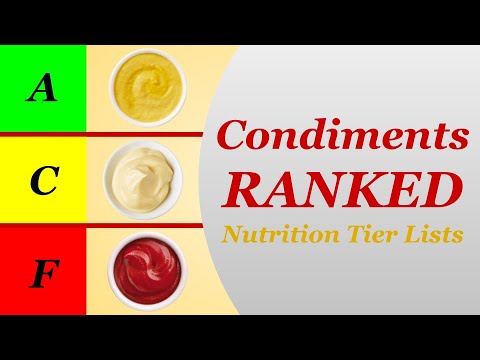
Let’s all be honest and say that many meals suck without some kind of condiment. A sauce, a dip, a dressing. Just something to enhance the flavor of the more nutritious, and admittedly less tasty stuff. While, this may feel like an unnecessary addition to the series, I’ve been wanting to talk about the potential damage from overindulgence in condiments for a while, and what better way to do so than with a tier list?
All nutrient data is pulled from the USDA’s National Nutrient Database for Standard Reference.
Introducing: Condiments – 0:00
Alfredo Sauce – 1:56
Balsamic Vinegar – 2:42
Barbecue Sauce – 3:21
Cocktail Sauce – 3:47
Duck Sauce – 4:17
Fish Sauce – 4:41
Hoisin Sauce – 5:25
Honey Mustard – 5:46
Horseradish Sauce – 6:12
Hot Sauce – 6:54
Hummus – 7:31
Italian – 8:11
Ketchup – 8:52
Kimchi – 9:23
Marinara Sauce – 10:00
Mayonnaise – 10:26
Mustard – 11:12
Pesto – 11:44
Pico de Gallo – 12:50
Ranch – 13:28
Relish – 14:03
Salsa – 14:30
Salsa Verde – 15:08
Sauerkraut – 15:38
Soy Sauce – 16:18
Sriracha – 17:00
Steak Sauce – 17:39
Tahini – 18:02
Tartar Sauce – 19:03
Teriyaki Sauce – 19:29
Thousand Island – 19:57
Wasabi – 20:26
Worcestershire Sauce – 21:09
Conclusion – 21:34
#condiments #sauce #nutrition #tierlist #diet #weightloss #healthyeating
hello everybody this is Talon with
another nutrition tier list a series
where I break down all the options in a
given food group and rank them based on
how nutritious they are and how good
they are for your health now I never
thought this day would come but we are
ranking condiments because it was
surprisingly highly requested so when I
say condiments that include sauces dips
dressings and basically anything else
that could be considered a liquidy
flavor enhancing addition to food just
going to lump them all in one video now
I think it’s understandable why this was
so requested it is very difficult to
come up with meals where condiments
won’t seriously contribute to how much
you actually want to eat them many meals
can be healthy until you add a heap of
unnecessary sugar or fat on top of it
and suddenly it’s not helping you as
much as you’d like and let me tell you a
lot of these I don’t have much to say
about them because many of them are just
flavored fat or liquid sugar with little
to mention beyond that realistically I
can’t cover every condiment in existence
so this video will be limited to the
most popular ones or the condiments that
I actually have something Nutri Ally
relevant to talk about now for a lot of
these there are different ways to make
them they can pretty much all be
homemade and different brands can have
different recipes but my numbers and
such will be based on the quintessential
often commercial variants because that’s
realistically what most people are going
to use so looking at the tiers for this
video we’re going to be comparing the
nutritional contents and benefits of
each condiment against any shortcomings
or health concerns that they may have
keep in mind that these lists ranked
independent of each other so an a tier
condiment may not equate to an a tier
meat or an a tier fruit all numerical
nutritional information on this list and
across the series will be based on 100
gram of the individual food for the sake
of consistency and ease of comparison
but I will say I sincerely hope you’re
not consuming that much of realistically
any of these in one sitting before we
start go ahead and let me know down in
the comments what’s your favorite
condiment and where do you think it’ll
land but now I think it’s time to get
lost in the sauce and get to the list
first on this list we’ve got alfredo
sauce alfredo sauce is a midc calori
condiments with a lesser micronutrient
profile it’s typically made of butter
cream and parmesan cheese it’s normally
a mild source of vitamin A due to a high
dairy fat content and some brands are a
decent source of calcium but really
that’s it alfredo sauce is just a lot of
extra calories from saturated fat an
admittedly healthier alternative if
you’re making your own alfredo sauce is
to swap the cream for Greek yogurt or
cottage cheese alfredo sauce is a good
example of taking some ingredients that
are really just fine in the right
amounts and combining them into
something that’s very calorically dense
that you’re not going to want to stop
eating fair warning there’s going to be
a lot of those on this list
realistically alfredo sauce is not the
worst topping in the world and I’m going
to put it in the D tier balsamic vinegar
is a slightly lower calori condiment
with a lower micronutrient profile
traditionally it is made from fermented
and acidified concentrate sweet white
grapes balsamic vinegar is a mild source
of iron and contains polyphenols that
are shown to prevent cardiovascular
diseases due to fermentation it contains
acetic acid which has a probiotic effect
shown to improve health of gut bacteria
and it’s shown to be very effective at
lowering LDL cholesterol levels what is
often dubbed the bad cholesterol now
macron nutritionally it’s just a bunch
of sugar but it is overall better and
less risky than a lot of the other
options we’ll be covering on this list
and for that I’m going to put it in the
C tier barbecue sauce is a relatively
higher calori condiments with a bad
micronutrient profile it’s made from
tomato sauce vinegar and sweeteners like
glasses or brown sugar now there is
technically some benefit from the
leftover tomato via lopine a carotenoid
antioxidant shown to benefit your heart
and skin health and act as an
anti-cancer but beyond that barbecue
sauce is nothing but a sugar balb and it
will be the first of many to land in the
F tier cocktail sauce is an average
calori condiments with a fair
micronutrient profile it’s really just a
combination of sauces including tomato
hot sauce Worster sauce as well as
horseradish and lemon cocktail sauce is
a source of vitamin C copper iron
potassium and carotenoids that can
convert into Vitamin A but beyond that
it’s just a good amount of sugar and an
unnecessary amount of sodium however
it’s not quite scraping the bottom of
the Barrel in terms of nutrition so I
guess I’m going to put it in the deter
Duck Sauce is a higher calori condiment
with a poultry micronutrient profile its
ingredients include Plum apricots Peach
pineapple vinegar Chili Pepper and Sugar
it is a decent source of Manganese and
that is is just about its only redeeming
quality beyond that duck sauce is just
another sugar bomb having in fact the
highest carbohydrate content on this
list and for that it’s going to be
landing safely in the F tier fish sauce
is a lower calori condiment with an
actually relevant micronutrient profile
it’s usually made of fermented mackerel
anchovies sardines or shrimp fish sauce
is actually a good source of protein per
calorie unless certain brands mess with
this or add lots of sugar it’s the best
source on this list of magnesium which
maintains the nervous muscle and immune
systems it’s the only substantial Source
on this list of vitamin B12 which is
used in red blood cell and DNA formation
and it’s a decent source of vitamin B6
and selenium now fish sauce is normally
the most sodium dense option on this
list by some margin so for those of you
that need to watch your sodium intake
keep that in mind but more than anything
fish sauce is the first actual
contributor of nutrients covered today
and I’m going to put it in the B tier
hoison sauce is a higher calori
condiment with some kind of
micronutrient content it’s made of soy
sugar and some kind of starch usually
rice or sweet potato it’s a moderate
source of vitamin B2 copper iron and
manganese but realistically it’s a sugar
bomb and on this channel there’s no
mercy for sugar bombs it’s going
straight to the F tier honey mustard is
a ridiculously high calori condiment
with a fat Centric micronutrient profile
it’s made of you guessed it honey and
mustard but also mayonnaise and vinegar
it’s actually a pretty decent source of
vitamin K and vitamin E due to the than
being fat soluble nutrients but
unfortunately honey mustard has the
unique trait of being high in sugar and
unuseful fat resulting in an overdose of
calories that can’t really be justified
thus it’s going in the F tier
horseradish sauce is a ridiculously high
calori condiment with a fat-based
micronutrient profile it’s usually made
of cream or mayonnaise vinegar and whoa
horseradish now horseradish sauce is one
of the fattiest choices on this list
usually some combination of saturated or
omega-6 poly unsat saturated fatty acids
now these do have their roles to play
but most people are already getting more
of them than they need it is high in the
fat soluble vitamin K and vitamin E and
horseradish itself does have some
antibacterial benefits but obviously
that gets enveloped in a load of fat
fats that may I remind you are not
practically all that useful for the
human body in the end horseradish sauce
is not going to be escaping the depths
of the F tier hot sauce is the lowest
calori condiment on this list with a
respectable micronutrient profile it’s
usually simply made of red peppers and
vinegar it’s pretty high in carotenoids
including beta carotene which can be
converted into Vitamin A an antioxidant
known for its eye preserving benefits
but most notably capsacin which has
powerful anti-inflammatory anti-cancer
and heart health benefits hot sauce is
also a decent source of iron and vitamin
B6 overall hot sauce is a virtually
calores condiment with actual potential
benefits and no real drawbacks in
reasonable amounts and it’s going to be
the first I’m going to put in the top
tier hummus is a higher calori condiment
with an impressive micronutrient profile
it’s made of chickpeas tahini olive oil
garlic and something acidic usually
lemon juice hummus is one of the few
legitimate sources of protein on this
list due to being largely made of chick
peas it’s an actually good source of
Manganese copper iron and phosphorus and
is a decent source of both soluble and
insoluble fiber benefiting gut flora and
aiding with digestive regulation many of
its ingredients most notably garlic are
shown to combat chronic inflammation and
heart rated diseases hummus isn’t
perfect but it is well-rounded and looks
like the Greek gods Ambrosia compared to
most things on this list and I have
decided to put it in the top tier
Italian dressing is a higher calori
condiment with a mediocre micronutrient
profile it’s usually made of soybean oil
vinegar sugar and a variety of spices
now contrary to popular belief due to
Italian not being as viscous as other
dressings it is still very fatty due to
being largely made of oil mainly Omega
six polyunsaturated fatty acids due to
that fat it is a decent source of
vitamin K and vitamin E and it is
generally regarded to be far better for
heart health than most Alternatives the
other main problem is that commercial
varieties are deceptively sugary which
you may not guess from its texture and
flavor overall Italian is not as
nutritious as many and it’s not as bad
as others and I’m going to put it in the
C tier ketchup is an average calori
condiments with a mild micronutrient
profile it’s made of tomato vinegar and
a variety of sugars due to ketchup being
largely made of tomato it’s a decent
source of the catenoid lopine a potent
antioxidant that benefits many aspects
of Health including your brain skin and
heart it’s also a decent source of
vitamin B2 and vitamin B6 beyond that
ketchup is inherently pretty sugary but
as far as sugar bombs go it is
definitely one of the more nutritious
ones and so in the end I’m going to put
ketchup in the D tier kimchi is an
incredibly low calorie condiment with an
impressive micronutrient profile it’s
made of fermented cabbage chilies a
variety of spices and often radish and
cucumber kimchi is a good source of iron
and vitamin K notably vitamin K2 which
plays an important role in bone health
many of kimchi’s ingredients have a
variety of antich chronic inflammatory
compounds and its lacto fermentation
process provides a probiotic effect
benefiting healthy gut bacteria kimchi
is as a whole shown to prevent yeast
infections and reduce the risk of heart
disease a genuinely healthy and fairly
innocent condiment I’m going to put
kimchi in the top two here marinara
sauce is a lower calorie condiment with
a solid micronutrient profile it’s made
of tomato onion garlic and a variety of
spices effectively making it the better
ketchup it’s a moderate source of
vitamin B3 vitamin E vitamin B6 and the
carotenoid antioxidant lopine that’s so
synonymous with tomatoes overall
marinara sauce is just a low calorie low
sugar topping that’s not usually doing
any real harm and I’m going to put it in
the C tier mayonnaise is the highest
calori instrument on this list with a
very fat focused micronutrient profile
it’s commercially made with soybean or
canola oil vinegar egg yolk starch and
some kind of acid it is easily the
fattiest option on this list with the
overwhelming majority of it being
omega-6 polyunsaturated fatty acids
mayonnaise is genuinely a great source
of vitamin K and a good source of
vitamin E but beyond that it is really
just a lump of plant-based lard however
for those of you who eat mayonnaise with
literally everything you know who you
are homemade mayonnaise can be made with
relative ease with other oils like
higher mono unsaturated fatty acid oils
and taste very similar however
commercial mayonnaise which is what I’m
judging I’m going to have to say is a d
tier condiment but an a tier instrument
mustard is a lower calorie condiment
with a respectable micronutrient profile
it’s made of mustard seed vinegar and
some spices mustard is a great source of
selenium and a good source of iron and
manganese it’s fairly antioxidant Rich
containing flavonoids and glucosinolates
that have antibacterial and anti fungal
and anti-cancer benefits if mustard has
any potential drawbacks it’s that it’s
commercially fairly sodium dense which
could be problematic for certain people
but overall mustard is a flavorful safe
bet of a condiment that I’m going to put
in the AER pesto is a higher calorie
condiments with a spectacular
micronutrient profile pesto technically
is a blanket term for any uncooked sauce
with the consistency of a paste it’s
made from basil olive oil pine nuts
garlic and parmesan cheese usually but
can realistically have a base of most
greens with a similar texture pesto is
one of the few actual sources of protein
on this list while being the best source
on this list of multiple micronutrients
these are vitamin K which plays a role
in blood clotting vitamin B2 which is
used in macronutrient metabolism vitamin
E an antioxidant known for its skin and
immune health benefits and vitamin B5
which breaks down nutrients and makes
red blood cells it’s also among the best
sources of phosphorus calcium and
vitamin A many of Pesto’s ingredients s
are individually shown to combat chronic
inflammation and the risk of several
chronic diseases like heart disease
Alzheimer’s diabetes and cancer now due
to pine nuts or some other tree nuts
being an essential ingredient those with
allergies beware but overall pesto
delivers everything you could possibly
want any condiments and more Landing it
safely in the top tier picayo is an
exceptionally low calorie condiments
with a wonderful micronutrient profile
per calorie it’s typically made of
tomato onion cilantro jalapeno and lime
the first thing to mention is that it’s
far more solid with often less additives
than Blended salsa it’s a solid source
of vitamin C fresh and untainted by heat
and it’s a great source of the coronoid
antioxidant lopine and its numerous
benefits many of its ingredients are
some of the most consistently beneficial
fruits and vegetables I’ve covered
before with compounds also shown to
boost immunity and heart health overall
I just have nothing to complain about
when it comes to Pico DEA it is the
perfect low calorie Edition and I’m
going to put it in the top tier Ranch is
a very very high calori condiments with
a decent micronutrient profile it’s
usually made of soybean oil vinegar
buttermilk egg yolks and a variety of
herbs and spices it is absolutely full
of fats mainly polyunsaturated omega-6
fatty acids due to its high-fat content
it’s a good source of vitamin K and it’s
a decent source of phosphorus and
vitamin E the high polyunsaturated
content is preventing me from calling
commercial Ranch healthy by any means
but like many other oily condiments
Ranch can be made at home with healthier
fats overall it’s not the absolute worst
thing in the world and I’m going to put
Ranch in the D tier sweet relish is an
average calori condiment with a solid
micronutrient profile it’s made of
pickled cucumbers cabbage vinegar and
spices relish is a solid source of
vitamin K and carotenoids and a decent
source of iron it is rich is in
prebiotics benefiting gut health and has
anti-inflammatory properties now sugar
contents in relish can vary wildly so
it’s hard to pin down an official rating
on that front but overall I’m going to
put relish in the CER salsa is a low
calori condiment with a decent
micronutrient profile it’s made of
tomato onion jalapeno lime and spices
it’s far more liquidy often with more
additional ingredients it contains a
fair amount of the catenoid lycopene
benefiting heart skin and immune health
and it’s also a good source of vitamin
B6 several of Salsa’s ingredients
contain beneficial compounds for immune
and heart health these include cortin
capsacin alisin and citric acid now
Blended salsa is usually a bit bit more
sugary and salty than fresh Pico DEA but
overall commercial salsa is a virtually
harmless topping to nearly anything that
I’m going to put in the a tier salsa
verde is a low calorie condiment with a
moderate micronutrient profile it’s made
of tomatillos Green Chili Peppers onion
lime and spices salsa ver is a decent
source of vitamin C vitamin K and
vitamin B3 it still contains carotenoids
and most requisite salsa ingredient
compounds and it has strong associations
with antibacterial and anti-cancer
effects on average it’s a bit less
nutritious than its red counterparts but
salsa verde is still a great choice that
I’m going to put in the a tier
sauerkraut is a low calori condiment
with a fair micronutrient profile it’s
made of fermented cabbage vinegar onion
and often a few other varying vegetables
sauerkraut is a decent source of iron
and vitamin C as well as the more
elusive vitamin K2 which plays an
important role in bone health due to
fermentation it has a probiotic effect
benefiting healthy intestinal flora and
it’s shown to reduce symptoms of IBS and
prevent diarrhea sauerkraut’s
ingredients are also shown to lower
blood pressure and LDL cholesterol
levels and it’s shown to improve mood
and brain function when you combine
ingredients like those in sauerkraut and
don’t overdose them with sugar it’s
impossible to really go wrong and I’m
going to put sauerkraut in the top tier
soy sauce is a lower calorie condiment
with a respectable micronutrient profile
it’s made of fermented soybeans and
wheat due to being significantly made
from soybeans it’s actually a solid
source of protein per calorie and it’s a
good contributor of Manganese phosphorus
magnesium iron potassium and some B
vitamins so is richer in arginine an
amino acids shown to lower blood
pressure and it’s shown to have a
Prebiotic effect now soy sauce is
stereotypically referred to as liquid
salt and that name is very fitting
because it is normally very sodium dense
which excessive sodium intake can cause
issues for people with certain
conditions but other than that soy sauce
is a fairly nutritious choice that I’m
going to put in the be tier Sriracha is
an average calorie condiment with a
great micronutrient profile it’s made of
chili pepper vinegar garlic and sugar
it’s the best source on this list of
carotenoids that can be converted into
vitamin A and be used as an antioxidant
that’s known for Eye Health and
preservation the primary of these is
capin which has powerful
anti-inflammatory and heart protective
properties Sriracha is also the best
source on this list of vitamin B6 which
is crucial for nervous and immune health
and vitamin C an antioxidant benefiting
immunity it’s also a good source of
vitamin E and iron now Sriracha is often
very sodium dense and deceptively sugary
which is going to keep it out of the
higher tiers thus I feel it best belongs
in the B tier steak sauce is an average
calori condiment with a mild
micronutrient profile it’s made of
tomato mustard Worster vinegar and hot
peppers this is another pretty
straightforward one it’s a decent source
of copper and iron two relatively tough
to find nutrients however it is higher
in sodium and sugar when compared to
many others overall all it’s not the
worst and I’m going to put steak sauce
in the D tier tahini is an exceptionally
high calorie condiment with by far the
best micronutrient profile per gram on
this list it’s made of sesame seeds and
some kind of oil per gram is the best
source on this list of protein as well
as copper which maintains the nervous
and immune systems and makes energy iron
which is used to make hemoglobin which
moves oxygen throughout the body
phosphorus which is needed for growth
and maintenance of cells bones and DNA
vitamin B1 which helps convert
carbohydrates into energy manganese
which helps form tissues bones and
hormones selenium an antioxidant also
used for DNA synthesis calcium which is
used mainly to maintain healthy bones
and zinc which helps immune and
Metabolism function tahini contains a
variety of antioxidants that combat
chronic inflammation and several
autoimmune diseases these include
sesamol a notable anti-cancer and
sesamin a type of lignin shown to
improve brain health tahini is without a
shadow of a doubt the most nutritious
condiment on this list and on a
nutrition tier list I really have no
choice but to put it in the top tier
tartar sauce is a higher calori
condiment with a mediocre micronutrient
profile it’s made of mayonnaise Capers
pickles lemons and some spices tartar
sauce is mainly fat-based with most of
it being omega-6 polyunsaturated fatty
acids it’s a decent source of vitamin K
due to it being a fat soluble vitamin
and that’s really all I have to say
about it tartar sauce really doesn’t
contribute anything even remotely
essential and I’m going to put it in the
F tier teriyaki sauce is an average
calorie condiment with a notable
micronutrient profile it’s made of soy
sauce sake honey sugar and some spices
Teriyaki contains a fair amount of
protein due to Soy and it’s a decent
source of phosphorus iron and magnesium
unfortunately commercially it’s
relatively sugary and it is still soy
sauce so it’s very sodium dense but a
lot of soy’s other benefits get drown in
the sugar I think the fairest place to
put teriyaki sauce is the D tier
thousand island is a very high calorie
condiments with a fat Centric
micronutrient profile it’s made of
tomato mayonnaise vinegar sour cream
relish sugar and spices it is very fatty
with the majority of it coming from
omega-6 polyunsaturated fatty acids it’s
a decent source of Vitamin K Vitamin E
and vitamin B1 but unfortunately it has
the unique distinction of being full of
sugar and unhelpful fats contributing a
lot of unnecessary calories and for that
thousand island is going in the F tier
Wasabi is a higher calori condiments
with a a relatively subpar micronutrient
profile it’s traditionally made with
Japanese horseradish but commercially
made with horseradish sorbital oil sugar
starch and spices Wasabi is a decent
source of vitamin E and contains
hydroxycinnamic acid which is shown to
decrease breakdown of Bones it has
antibacterial benefits preventing
potential food poisonings and combating
certain harmful intestinal bacterias
Wasabi as a whole is also shown to
combat chronic inflammation now you
should keep in mind that it is very
sodium dense and honestly I’m having
second thoughts on if it’s even a
condiment but I’m going to put Wasabi in
the B tier and last on this list we’ve
got the only one that I’m scared to
pronounce worser sauce is a lower calori
condiment with a solid micronutrient
profile it’s made of vinegar molasses
Tamarind anchovies onion lemon and
spices it’s the best source on this list
of potassium which functions in fluid
balance and it’s a decent source of iron
copper and vitamin C though it is
relatively sugary it’s not nearly as
that as our requisite sugar balms
overall this sauce is going to round out
our list in a c tier so I think this may
be the first list where I have more
things in the bottom tiers than the
higher tiers and realistically that’s
pretty fitting I don’t think many people
are making condiments with health in
mind at least not over flavor and the
ones that do have both are most likely
happy accidents so the most important
takeaway from all of this is be careful
how much you’re indulging in flavor
enhancers don’t be afraid of them but be
aware of the potential side effects of
too much sugar or Omega 6es and when it
comes to calories condiments of all
things can be the deciding factor
between achieving your goals or not now
if you enjoyed the video or at the very
least learned a little something I
encourage you to subscribe as I’ve got
plenty more of these on the way go ahead
and let me know down in the comments
what food group you want me to rank next
and remember that all I ask is that you
do your own research and advocate for
your body you only get the one