
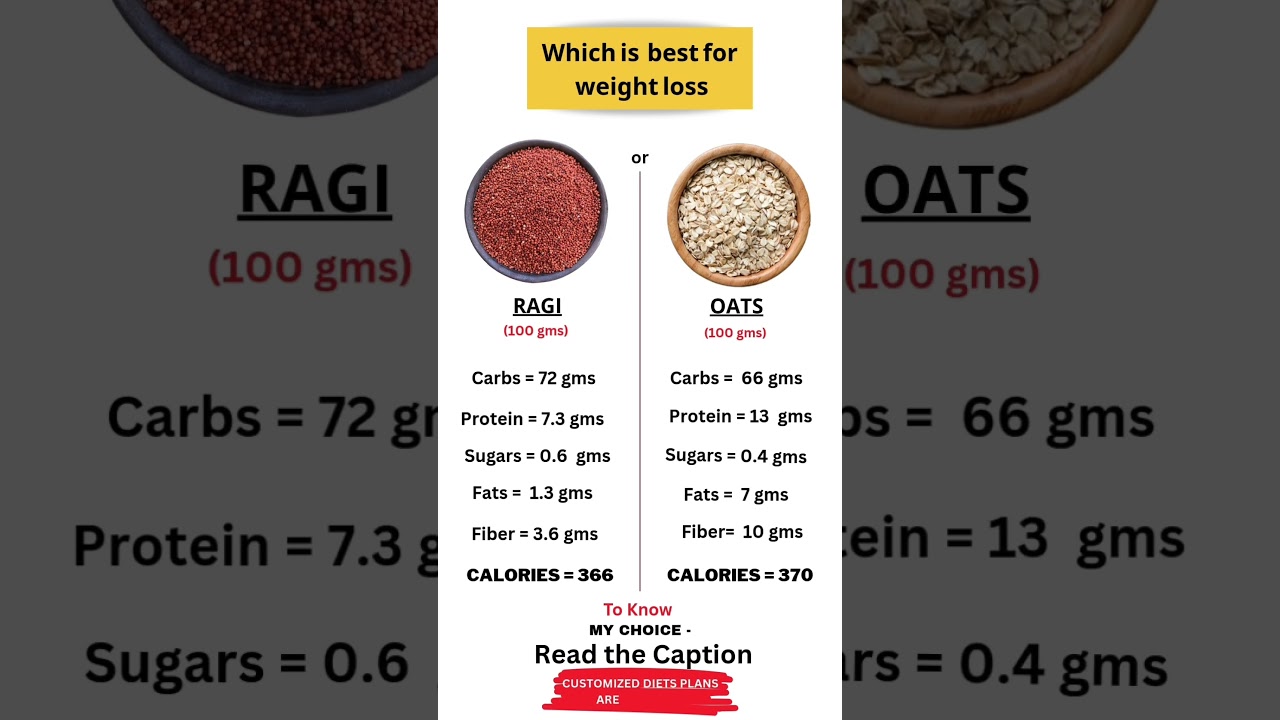
🏋️♀️ Ragi vs Oats: Which is the Best for Weight Loss? 🌟
In today’s enlightening video, we dive deep into the age-old debate: Ragi or Oats? Which supergrain reigns supreme for weight loss? Discover the nutritional profiles of both, their health benefits, and how they can fit into your diet for effective weight management. 🍽️
We break down everything from calories to fiber content, and you’ll learn delicious recipes to incorporate both into your meals! Don’t miss our expert tips on making the most of these superfoods. 🤩 Ready to transform your diet? Hit play and unlock the secrets to a healthier you! ➡️✨
#RagiVsOats #WeightLoss #healthyeating
Both oats and ragi (finger millet) are healthy whole grains, but they work differently for weight loss. Let’s compare them:
Oats vs Ragi for Weight Loss
🌾 Oats
Rich in soluble fiber (beta-glucan) → slows digestion, keeps you full for hours.
Helps reduce cholesterol and maintain steady blood sugar.
Very versatile → can be eaten as porridge, overnight oats, or added in smoothies.
Best for morning meals since it provides long-lasting energy.
✅ Weight loss benefit: Prevents overeating by controlling hunger and cravings.
🌾 Ragi (Finger Millet)
High in calcium & iron → strengthens bones and improves blood health.
Low glycemic index → releases sugar slowly, good for diabetes & fat loss.
Naturally gluten-free and easy to digest.
Works well as ragi mudde, dosa, roti, or porridge.
✅ Weight loss benefit: Controls blood sugar spikes and reduces belly fat storage.
🔎 Key Difference
Oats → better for satiety (keeps you full longer).
Ragi → better for stable blood sugar and traditional Indian diets.
🏆 Verdict: Which is Best for Weight Loss?
If you want to control hunger & avoid snacking → Oats win.
If you want to manage diabetes, bone health, and Indian-style meals → Ragi wins.
Best approach: Include both in your diet (oats for breakfast, ragi for lunch/dinner options).