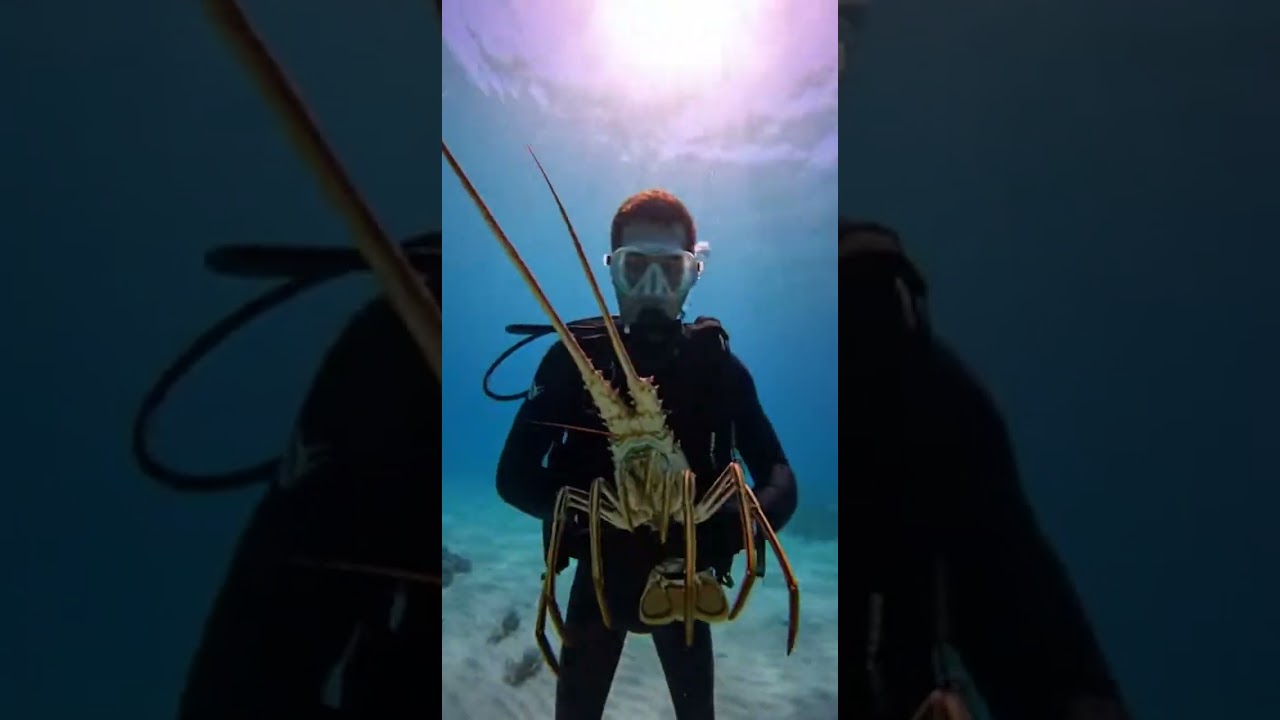
Hunting Giant Lobsters in the Blue Ocean – Underwater Adventure!| EatHealthyVietnam #LobsterHunting
Dive into crystal blue waters for the thrilling adventure of hunting giant spiny lobsters in pristine coral reefs—combining underwater skill, sustainable practices, and the ultimate fresh seafood reward!
The setting: Tropical and subtropical waters with perfect visibility (80-100 feet)—Caribbean, Florida Keys, Bahamas, Australia, or Southeast Asian reefs at 30-50 feet depth. Prime locations feature healthy coral ecosystems with abundant crevices, ledges, and rocky formations where giant lobsters hide during daylight hours.
Target species: Spiny lobsters (Caribbean spiny, California spiny, Australian rock lobster)—distinguished by long spiny antennae (up to 3 feet), no claws (unlike Maine lobsters), and armored bodies. Giants measure 12-24 inches body length, weigh 10-15+ pounds, with thick antennae like broom handles. These are older specimens (potentially decades old) requiring years to reach legal harvest size.
The hunting technique: “Tickle stick” method—divers use 18-24 inch rod to gently prod lobster’s tail and rear legs from behind while it hides in crevice. Natural instinct makes lobster walk forward away from disturbance, emerging from hole. Quick grab behind head/carapace (avoiding thrashing spiny antennae), measure with gauge to confirm legal size (minimum carapace length varies: Florida 3 inches, California 3.25 inches, Bahamas 3.5 inches), then secure in mesh catch bag if legal.
Essential gear: Scuba equipment (wetsuit, BCD, tank, regulator, mask, fins), specialized lobster tools (tickle stick, catch bag, measuring gauge, thick dive gloves for protection), dive knife (safety), and proper licensing/permits. Diver certification required (PADI/SSI Open Water minimum).
Critical regulations: Minimum size limits (measured underwater before taking), daily bag limits (typically 6 per person recreational), closed seasons (breeding protection—Florida closed April-July for traps), and absolute prohibition on taking egg-bearing females (orange egg mass under tail). Undersized lobsters must be released immediately to minimize stress.
Sustainable practices: Take only what you’ll consume, strictly follow size/bag limits, protect breeding females, avoid damaging coral during pursuit, dive during legal seasons, and understand that giants are oldest specimens—consider releasing largest for breeding population. Responsible harvesting ensures future generations can enjoy this resource.
The challenge: Giant lobsters are wiser, hide deeper in crevices, require patience and skill to coax out. Their powerful tails flip backward for escape, thick antennae defend aggressively, and size makes handling difficult. Success requires calm approach, precise tickle stick technique, and confident two-handed capture.
Safety considerations: Sharp lobster spines can puncture skin (wear gloves), marine hazards include fire coral, sea urchins, moray eels in holes, and jellyfish. Diving risks: decompression sickness from rapid ascent, nitrogen narcosis, equipment issues. Always dive with buddy, follow ascent rates (30 feet/minute max), safety stop at 15 feet for 3-5 minutes.
Processing and preparation: On boat—humane dispatch (knife through head), separate tail from body (tail contains meat), store on ice. Shore preparation: split tail shell, expose meat, grill with garlic butter (5-7 minutes), steam, boil, or broil. Fresh-caught lobster offers unmatched sweet, tender, delicate flavor—reward for underwater effort.
Nutritional value: High protein (20g per 3 oz), low fat, excellent source of selenium, zinc, B12, copper, and omega-3 fatty acids. Low calorie (about 80 calories per 3 oz) before butter additions.
Economic and cultural importance: Multi-million dollar commercial industry in Florida, Caribbean, Australia. Lobster diving attracts tourism through charters ($75-150/person day trips), supports coastal economies, and remains integral to island community traditions through festivals and local cuisine.
At EatHealthyVietnam, we celebrate sustainable ocean harvesting and responsible marine stewardship!
#LobsterHunting, #UnderwaterDiving, #SpinyLobster, #ScubaDiving, #OceanHunting, #GiantLobster, #SustainableSeafood, #MarineConservation, #FloridaKeys, #CaribbeanDiving, #CoralReef, #SeafoodHunting, #FreshLobster, #DiveLife, #OceanAdventure, #ResponsibleFishing, #MarineLife, #UnderwaterPhotography, #SeafoodLovers, #EatHealthyVietnam