

Your support helps us to tell the story
From reproductive rights to climate change to Big Tech, The Independent is on the ground when the story is developing. Whether it’s investigating the financials of Elon Musk’s pro-Trump PAC or producing our latest documentary, ‘The A Word’, which shines a light on the American women fighting for reproductive rights, we know how important it is to parse out the facts from the messaging.
At such a critical moment in US history, we need reporters on the ground. Your donation allows us to keep sending journalists to speak to both sides of the story.
The Independent is trusted by Americans across the entire political spectrum. And unlike many other quality news outlets, we choose not to lock Americans out of our reporting and analysis with paywalls. We believe quality journalism should be available to everyone, paid for by those who can afford it.
Your support makes all the difference.Read more
Despite having 13 restaurants, delis and cafes to his name worldwide, Yotam Ottolenghi is more of a home cook these days.
“I spend the majority of my cooking at home because at work I don’t cook so much – I’m more like the conductor of an orchestra,” says the British-Israeli chef and restaurateur.
Meanwhile at his home, “I cook for myself, for my kids, for my friends, people who come over, and [my food] ends up being much more geared towards people’s daily palates rather than an occasional palate”, such as a restaurant meal.
He may be famed for helping to popularise a whole movement of using Middle Eastern flavours in British home kitchens, as well as vegetable-forward cuisine, with his landmark cookbooks, Plenty in 2010, and Jerusalem in 2012, but his family “like a schnitzel, or they want a potato”, laughs the 57-year-old dad-of-two.
Being in the kitchen is much more than a necessary means to put food on the table for his 11 and 13-year-olds and his husband though. For Ottolenghi it’s a good opportunity to put down his phone and be more present.
“I think probably like 90 per cent of the population, I’m addicted to my phone,” he says, “I look at it more than I should. I check it four times an hour, if I’m lucky.”
Eight years after the publication of another bestselling cookbook, Ottolenghi Simple, he is back with an “even simpler” one – Simple Too, written alongside recipe and product developer Verena Lochmuller. And one of the main shifts that everyone has experienced in that time is our phone.
“We had the phone eight or 10 years ago, but it wasn’t as prominent as it is now. We were not like glued to it in social media as we are now, and a lot of people get their food info through their phones,” the chef says.
 ‘Simple Too’ embraces shortcuts, pantry staples and the reality that most of us do not have hours to make dinner (Ebury)
“Sometimes the phone adds anxiety to an already anxious environment. I think old-school cooking, putting the screen aside, going into the kitchen, bringing out some ingredients and because you are engaged with the ingredients, you tear yourself away from your phone and you just have time for yourself – I think that is very precious.
“I do have a feeling that everyone’s looking for ways to do things that are meaningful – like doing crafts or meditation, whatever it is – all those human activities that are just much more real.
“Cooking is an enormous opportunity. In some ways it’s as old as human history. It really grounds you, it really connects you with the past. We’re all connected to ingredients in some ways and it’s a way to connect to your own past. Cooking something that you had as a child is immediately comforting.
It’s a great opportunity that we miss out on too often, he says.
“You choose the level of complexity – this is the most important point. Don’t set the bar too high for cooking.”
It might be a surprise to hear but even Ottolenghi takes shortcuts in the kitchen – “Oh, all the time!” he laughs. “Of course, I’ll spend time in the kitchen when I have time. But I also come back from work and I think, I only have 20 minutes to half an hour to put it all together.
“I get takeouts, I warm up things, sometimes I don’t feel like cooking. I even have junk food sometimes,” he says, his latest cookbook being a reflection on where our lives are now – busy, time-stretched and with more digital distractions than ever before.
 Ottolenghi wrote the new book with recipe and product developer Verena Lochmuller, eight years after ‘Ottolenghi Simple’ (Jonathan Lovekin)
“We use a lot of spice mixes like ras el hanout, pre-cooked rice or pre-cooked chickpeas to really embrace the pantry in a way that allows you to cook without having to start it from scratch every time you go into the kitchen.
Using a few helpful shortcuts, “still counts as cooking”, he says. “Don’t put yourself in a position where you’re not going to cook because you’re going to have to chop forever. Condiments, pre-cooked things, all allow people to actually cook for themselves and not rely on deliveries or ready-made meals.”
While his influence comes from many areas of the world, the Middle Eastern pantry ingredients Ottolenghi has become synonymous with, like pomegranate molasses and rose harissa, are very much staples.
“There’s been this amazing revolution in terms of what people have in their pantries. From miso to black garlic to all the types of soy sauce, to tahini, to the different kind of cheeses that you can use, types of fetas, and then spices, marinades, ferments. It’s kind of endless.”
Vegetable-forward cuisine, as always, takes centre stage – think, whole roasted kohlrabi, butternut parmigiana and fennel, grape and olive tarte tatin.
Fennel is an underrated, “wonderful” vegetable he thinks we should be using more of. “I think a lot of people think of fennel and think of raw fennel, which is a bit like celery, and it can be a bit challenging texturally and flavour-wise, but once you cook it, it goes all beautiful and sweet, it doesn’t have the harshness.”
His approach to veg has always been to show “how good they can be”.
Kohlrabi is “even more underused and underrated in this country, he says. “It’s a wonderful vegetable – a bit like a cross between a radish and an apple. It’s really nice, fresh, thinly sliced with some olive oil and a herb, it also cooks really beautifully if you give it olive oil or butter. Like garlic, it goes from something quite raw and harsh to something very, very sweet in the process of slow cooking.”
Chicken meatballs with pistachios and spinach
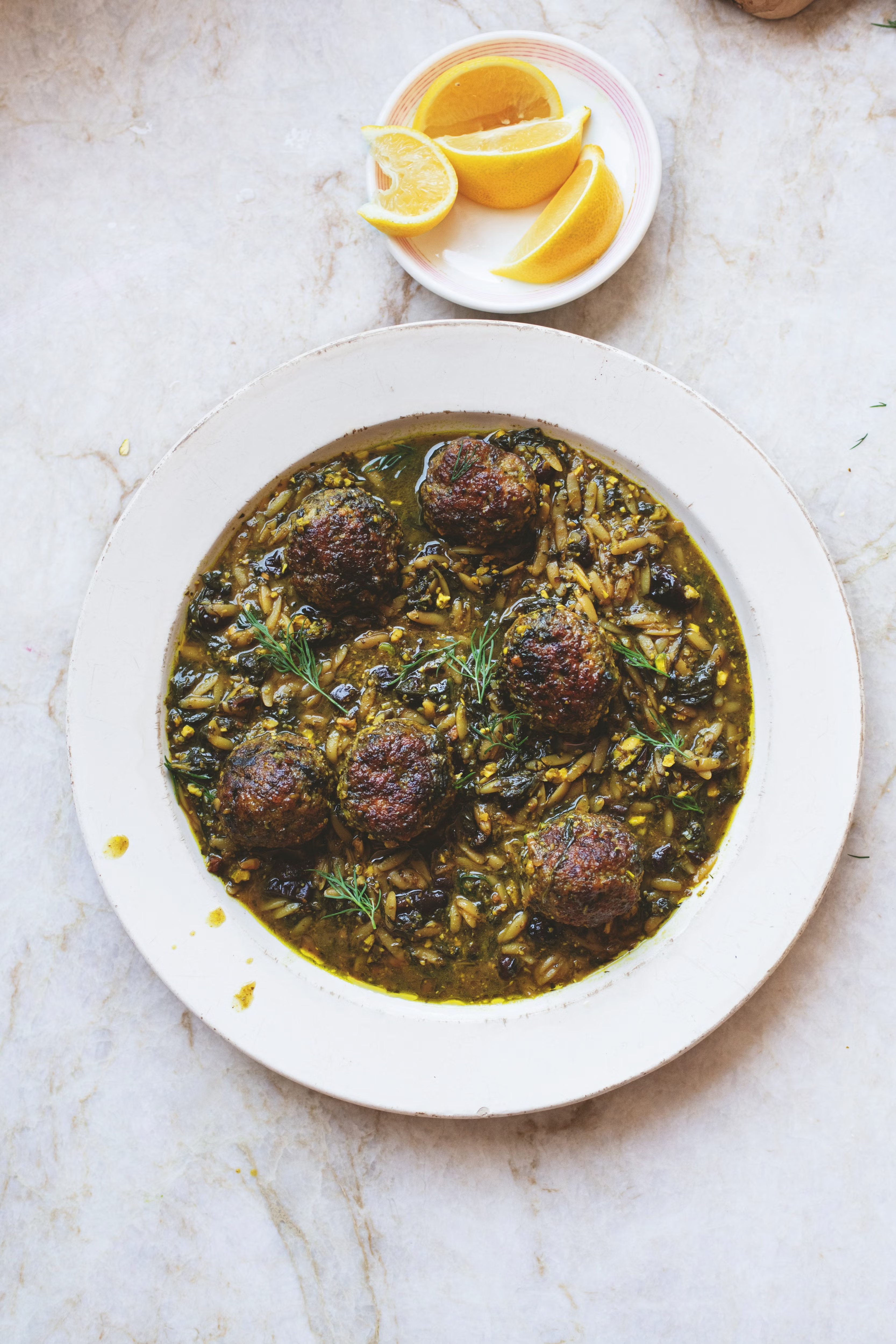 Pistachios, sour cherries and plenty of herbs give Ottolenghi’s chicken meatballs their Iranian-inspired punch (Jonathan Lovekin)
“These Iranian-inspired meatballs don’t sit quietly on the plate. They’re super-bright with plenty of herbs and pistachios, and lightly sweetened with dried fruit,” says Ottolenghi. “The food processor does much of the work for you and the result is a whole meal in itself, served in a shallow bowl, with some flatbreads if you like.”
Serves: 4-6
Prep time: 15 minutes | Cook time: 30 minutes
Ingredients:
100g pistachio kernels
8-10 spring onions, roughly chopped (125g)
50g coriander, roughly chopped
20g dill, roughly chopped
3 garlic cloves, roughly chopped
1 tsp ground turmeric
2½ tsp ground cumin
25g panko breadcrumbs
1 egg
400g chicken or turkey mince
105ml olive oil
200g baby spinach leaves, roughly chopped
650ml chicken stock
100g orzo
75g dried sour cherries (or cranberries), roughly chopped
2 tsp cherry molasses (or pomegranate molasses)
Lemon wedges, to serve
Fine sea salt and black pepper
Make ahead: The whole dish can be made the day before, ready towarm through before serving.
Method:
1. Combine the first 7 ingredients in the bowl of a food processor and blitz until finely chopped. Transfer 175g of the mixture to a small bowl and set aside. Keep the remainder in the food processor and add the breadcrumbs, egg, mince, ¾ teaspoon of salt and plenty of pepper. Blitz to combine, then shape into 14 meatballs.
2. Put 2 tablespoons of oil into a large sauté pan on a medium-high heat. Add the meatballs and brown on all sides, about 5 minutes. Remove to a plate.
3. Add the remaining 75ml of oil to the pan along with the reserved blitzed mixture and the spinach. Cook for about 3 minutes, stirring until wilted, then add the stock, orzo, sour cherries, molasses and ¾ teaspoon of salt. Bring to a simmer, add the meatballs and reduce the heat to medium-low. Cook for 10 minutes, covered, until the meatballs and orzo are cooked through. Leave to stand, covered, for 5-10 minutes, until the orzo has plumped up and thickened the sauce. Serve with a squeeze of lemon.
Butternut ‘parmigiana’
 Butternut squash stands in for aubergine in a quicker, one-dish take on parmigiana (Jonathan Lovekin)
“A classic parmigiana – made with slices of aubergine, layered with cheese and then baked – is hard to beat,” enthuses Ottolenghi. “This take might not have the Parmesan (or, indeed, the aubergines) but it echoes the flavours and textures and has the advantages of being made in a fraction of the time, assembled in one dish and also very much hitting the same spot. Serve with a butterhead lettuce salad.”
Serves: 4
Prep time: 20 minutes | Cook time: 50 minutes
Ingredients:
1 large butternut squash (about 1.3kg), unpeeled, halved lengthways and deseeded
105ml olive oil
4-5 plum tomatoes, grated and skins discarded (380g)
1 tbsp tomato paste
⅛ tsp ground allspice
½ tsp ground cumin
⅛ tsp ground cinnamon
¼ tsp caster sugar
25g panko breadcrumbs
1 garlic clove, crushed
2 tsp za’atar
4 oregano sprigs, plus a few leaves for garnish
125g taleggio (or brie or mozzarella), thinly sliced
Fine sea salt and black pepper
Method:
1. Preheat the oven to 220C fan.
2. Cut each squash half into 3 long wedges and arrange them in a large high-sided roasting tray. Rub all over with 2 tablespoons of oil, ½ teaspoon of salt and a good grind of pepper. Bake for about 35 minutes, until browned and cooked through.
3. In a small bowl mix together the tomatoes, tomato paste, spices, sugar, 3 tablespoons of oil, 2 tablespoons of water and ½ teaspoon of salt. Set aside.
4. In a separate bowl, mix together the breadcrumbs, garlic, ½ teaspoon of za’atar and 1 tablespoon of oil.
5. Remove the squash from the oven, then pour the tomato sauce around it and nestle in the oregano sprigs. Lay the cheese evenly over the squash, sprinkle with the breadcrumb mixture and drizzle over the remaining tablespoon of oil. Return to the oven for 10-15 minutes, until golden and bubbly. Sprinkle over the remaining za’atar and oregano leaves and serve.
Aubergines with capers and dill
 These roasted aubergines are Ottolenghi’s sped-up answer to caponata – sweet, savoury and sharp with capers and vinegar (Jonathan Lovekin)
“This is a kind of simplified and sped-up caponata. It’s sweet yet savoury, rich but not too much. That’s why it’s good in so many situations: as a smart warm starter, a fridge staple to stuff into pita, or a side to go with meat, fish or a bowl of rice,” says Ottolenghi.
Serves: 4
Prep time: 5 minutes | Cook time: 35 minutes
Ingredients:
2-3 aubergines, halved lengthways and each half cut into 3 long wedges (750g)
90ml olive oil
3 garlic cloves, thinly sliced
50g capers
1 tbsp tomato paste
1 tbsp maple syrup
3 tbsp apple cider vinegar
15g dill, finely chopped
2 tbsp tahini, to serve (optional)
Fine sea salt and black pepper
Method:
1. Preheat the oven to 220C fan.
2. Combine the aubergines with 60ml of oil, ½ teaspoon of salt and a good grind of pepper on a large parchment-lined baking tray. Roast for 25-30 minutes, until caramelised around the edges.
3. Meanwhile, put the remaining 2 tablespoons of oil into a small saucepan along with the garlic, capers, tomato paste, ¼ teaspoon of salt and plenty of pepper. Cook on a medium heat for about 5 minutes, stirring often, until the garlic is golden. Add the maple syrup and vinegar, cook for a final 2 minutes, then remove from the heat. As soon as the aubergines come out of the oven, pour over the dressing and toss gently until well coated. Set aside for 5 minutes, then fold through the dill.
4. Transfer the aubergines, plus any dressing left on the tray, to a serving platter. Drizzle with tahini, if using, and serve.
‘Ottolenghi Simple Too’ by Yotam Ottolenghi (Ebury Press, £30).


