
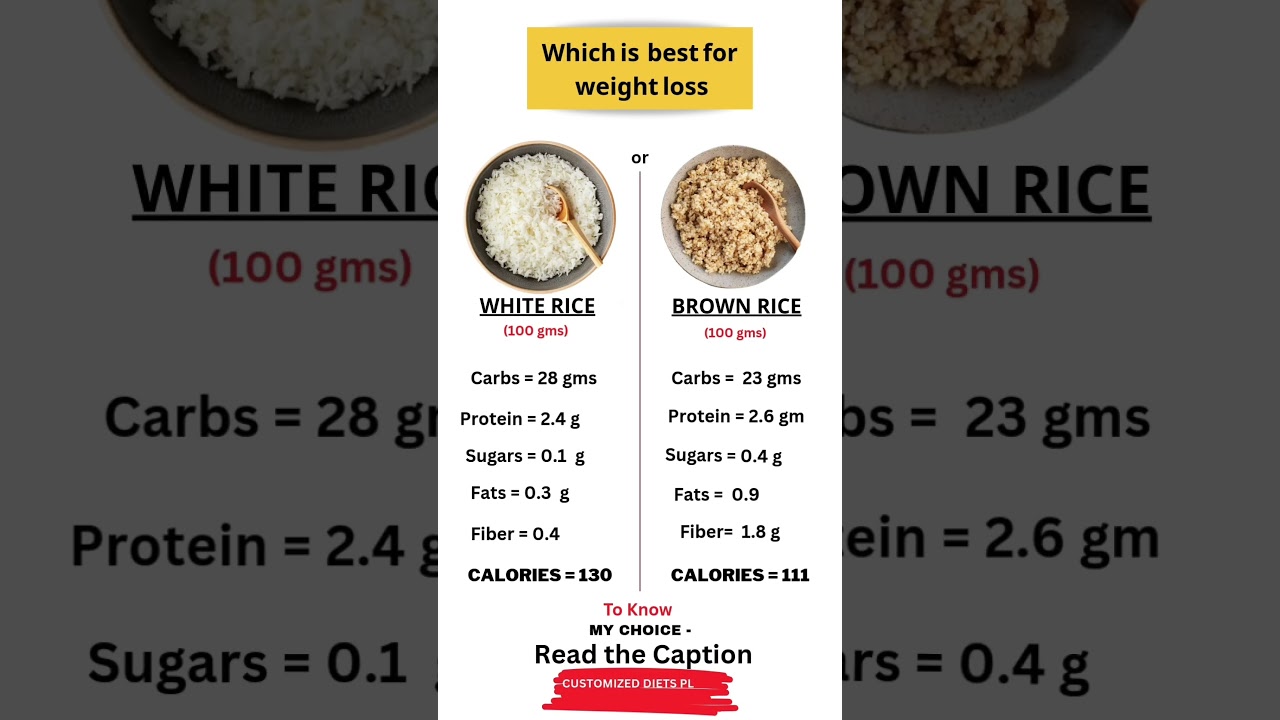
🍚 White Rice vs Brown Rice: THE WEIGHT LOSS SHOWDOWN! 🌾
Are you confused about which rice is better for your weight loss journey? In this MUST-WATCH video, we break down the key differences between white rice and brown rice—when it comes to calories, fiber, and those sneaky health benefits! 🍽️💪
Join our nutrition expert as we unravel the myths, compare nutrient profiles, and show you how to incorporate these favorite carbs into YOUR meals without the guilt. 🚀✨ Watch till the end for a delicious weight loss-friendly rice recipe that you’re going to love! Don’t forget to SUBSCRIBE and ring that bell for more health hacks! 🔔 #WeightLoss #HealthyEating #RiceDebate
let’s break down each nutrient in white rice vs brown rice and see how it actually impacts weight loss 👇
1. Calories
White Rice (~130 kcal/100g) → Slightly higher calories than brown rice. Easy to overeat since it digests fast.
Brown Rice (~111 kcal/100g) → Lower in calories and more filling, so you naturally eat less.
🔑 Impact: Brown rice helps with calorie control → crucial for fat loss.
2. Carbohydrates
White Rice (28g) → Simple starch, breaks down quickly, spikes blood sugar.
Brown Rice (23g) → Complex carbs, digests slower, releases energy steadily.
🔑 Impact: Stable carbs in brown rice reduce cravings and prevent overeating.
3. Dietary Fiber
White Rice (0.4g) → Almost no fiber. Hunger comes back quickly.
Brown Rice (1.8g) → High fiber. Keeps you full longer, aids digestion, supports gut health.
🔑 Impact: Fiber is key for appetite control and fat loss.
4. Protein
White Rice (2.4g) vs Brown Rice (2.6g) → Small difference, but brown rice has slightly more.
🔑 Impact: Protein helps preserve muscle mass during weight loss and boosts metabolism.
5. Fat
White Rice (0.3g) → Almost negligible.
Brown Rice (0.9g) → Small healthy fat content.
🔑 Impact: Minimal role, but healthy fats in brown rice improve satiety.
6. Glycemic Index (GI)
White Rice (70–89, High GI) → Rapid sugar spike → fat storage & hunger later.
Brown Rice (50–55, Medium GI) → Slow sugar release → stable energy.
🔑 Impact: Brown rice is much better for controlling hunger and insulin response.
7. Iron
White Rice (1% DV) → Low.
Brown Rice (2% DV) → Higher.
🔑 Impact: Iron supports oxygen delivery in the body, helps energy levels during workouts.
8. Magnesium
White Rice (3% DV) → Very little.
Brown Rice (11% DV) → Good source.
🔑 Impact: Magnesium regulates blood sugar, reduces cravings, and helps fat metabolism.
9. Phosphorus
White Rice (4% DV) vs Brown Rice (8% DV) → Brown rice has double.
🔑 Impact: Supports energy metabolism → helps burn calories more efficiently.
10. Potassium
White Rice (26 mg) → Very low.
Brown Rice (43 mg) → Slightly higher.
🔑 Impact: Potassium helps reduce water retention and bloating, making weight loss visible.
11. Folate (Vitamin B9)
Both provide ~2% DV.
🔑 Impact: Folate supports cell function and metabolism, indirectly aiding weight management.
12. Vitamin B1 (Thiamine)
White Rice (3% DV) vs Brown Rice (6% DV).
🔑 Impact: Thiamine helps convert carbs into energy → essential for fat burning.
13. Antioxidants
White Rice: Almost none.
Brown Rice: Present in bran layer.
🔑 Impact: Antioxidants reduce inflammation, which is often linked to fat storage.
✅ Final Verdict for Weight Loss
White Rice: Quick energy, but leads to hunger, fat storage, and nutrient gaps.
Brown Rice: More fiber, nutrients, antioxidants → helps control appetite, metabolism, and blood sugar.
👉 Brown rice wins for weight loss.