Benzinga and Yahoo Finance LLC may earn commission or revenue on some items through the links below.
Editor’s note: The story has been updated to include a comment from the White House.
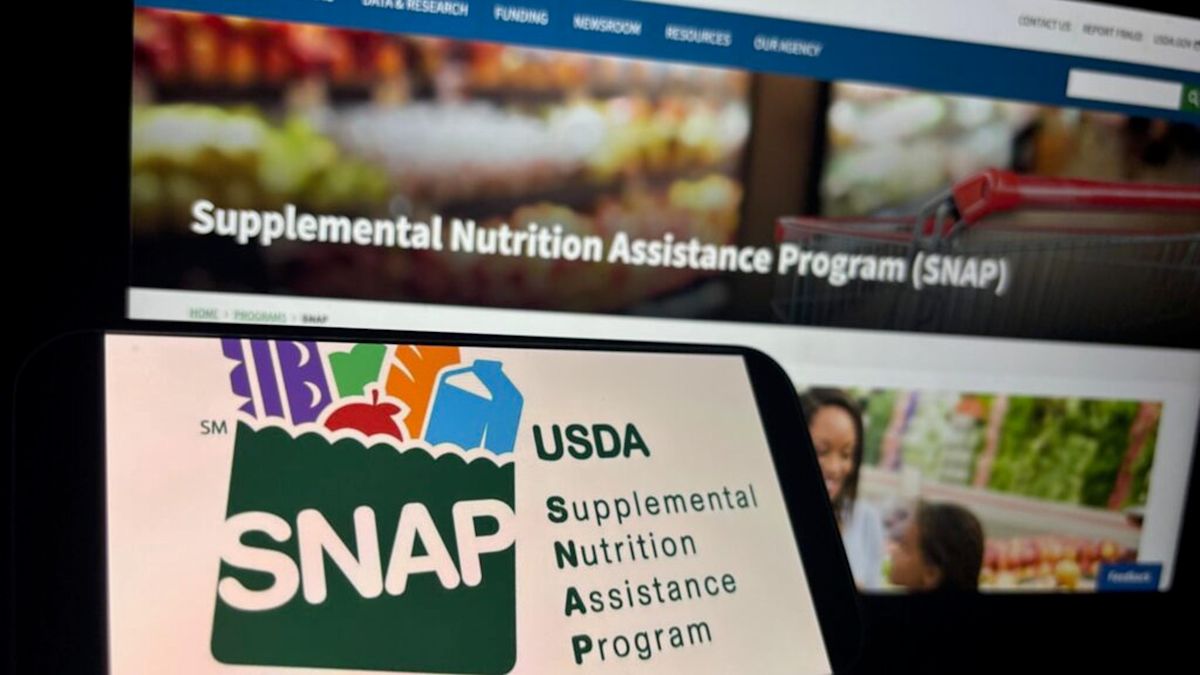
A major change to the Supplemental Nutrition Assistance Program (SNAP) took effect Oct. 1, shifting a larger share of the program’s administrative costs to states.
As of Oct. 1, states now cover 75% of SNAP’s administrative costs, up from 50%, reported CBS News on Wednesday. Beginning in October 2027, states with high payment-error rates will also owe up to 15% of benefit costs.
About 5.2 million Americans have lost SNAP benefits since H.R. 1, also known as the One Big Beautiful Bill Act, was enacted, according to an analysis from the Food Research & Action Center.
Don’t Miss:
SNAP Faces Fallout
Crystal FitzSimons, president of the Food Research & Action Center, called the changes “absolutely unprecedented,” reported CBS.
White House spokesperson Anna Kelly said in an emailed statement to Benzinga that President Donald Trump is “strengthening SNAP for the Americans who need it by ensuring these programs are sustainable for future generations.” Kelly added that the “Working Families Tax Cuts bill restores basic work requirements, prioritizes American citizens, and implements reasonable cost-sharing measures with states to crack down on waste, fraud, and abuse.”
SNAP enrollment has fallen to its lowest level since 2019, according to the report.
Democrats React To Changes to SNAP
Democratic lawmakers wasted no time criticizing the rollout. House Speaker Nancy Pelosi posted on X that the provisions “cut Medicaid and eliminate funding for SNAP, threatening the food assistance and health care that millions of Americans depend on.”
Today, provisions of the President’s Big Ugly Bill take effect that cut Medicaid and eliminate funding for SNAP, threatening the food assistance and health care that millions of Americans depend on.
The President and his sycophants in Congress gleefully cheered these cuts—but…
— Nancy Pelosi (@SpeakerPelosi) October 1, 2026
Trending: Think you’re saving enough for your kids? You might be dangerously off — see why
Echoing that concern, Sen. Elizabeth Warren (D-Mass.) wrote that “5 million people have already lost food assistance, including 1.5 million+ kids since the bill was enacted.” Warren had sounded a similar alarm in September, warning that states could face an “existential crisis” as the federal share of SNAP administrative costs dropped from 50% to 25%.
TODAY: New SNAP cuts are kicking in because of Trump’s “Big Beautiful Bill.”
5 million people have already lost food assistance, including 1.5 million+ kids since the bill was enacted.
No kid deserves to go hungry so Trump can give his billionaire buddies another tax handout.
— Elizabeth Warren (@SenWarren) October 2, 2026
llinois Gov. JB Pritzker went further, saying on X that Trump “made families choose between putting food on the table and paying their bills.”
Illinoisans have lost access to food assistance because the President wanted to make himself and his friends at Mar-a-Lago even richer.
He made families choose between putting food on the table and paying their bills by driving up costs and cutting SNAP. https://t.co/TFVtD7CS55
— Governor JB Pritzker (@GovPritzker) October 1, 2026
See Also: Still Learning the Market? These 50 Must-Know Terms Can Help You Catch Up Fast
Enrollment Drops Vary By State
Arizona has seen the steepest decline of any state, losing 52% of its SNAP caseload — about 461,272 people — since H.R. 1 was enacted in July 2025, according to FRAC’s SNAP Participation Dashboard. Nationally, SNAP participation has fallen by about 6.1 million people since Trump took office in January 2025.
Separately, states have spent millions on contractors to rework eligibility systems for the new requirements, with Iowa alone expecting to spend $20.3 million.
Image via Shutterstock
Building Wealth Across More Than Just the Market
Building a resilient portfolio means thinking beyond a single asset or market trend. Economic cycles shift, sectors rise and fall, and no one investment performs well in every environment. That’s why many investors look to diversify with platforms that provide access to real estate, fixed-income opportunities, precious metals, and even self-directed retirement accounts. By spreading exposure across multiple asset classes, it becomes easier to manage risk, capture steady returns, and create long-term wealth that isn’t tied to the fortunes of just one company or industry.
Arrived
Backed by Jeff Bezos, Arrived Homes makes real estate investing accessible with a low barrier to entry. Investors can buy fractional shares of single-family rentals and vacation homes starting with as little as $100. This allows everyday investors to diversify into real estate, collect rental income, and build long-term wealth without needing to manage properties directly.
Realberry
For accredited investors looking beyond traditional stocks and bonds, Realberry provides access to institutional-quality real estate investments, including a preferred equity opportunity in the 297-room Hyatt Place Boston Seaport. The firm has invested across multiple property types and markets, with 13 million square feet of real estate across seven U.S. states and $481 million in cumulative distributions paid to investors as of Q4 2025.
Skybound Entertainment
Entertainment franchises can become valuable long-term assets when they successfully expand across multiple platforms. Skybound Entertainment, the company behind The Walking Dead and Invincible, develops original intellectual property that spans comics, television, film, video games, merchandise, and licensing. With more than 250 IPs in its portfolio and a strategy focused on retaining franchise rights while scaling successful stories across media, Skybound offers investors exposure to the growing entertainment and creator economy through a private company rather than traditional public market investments.
American PowerGen
As artificial intelligence drives a surge in electricity demand, reliable power generation is becoming a critical part of the technology ecosystem. American PowerGen is developing natural gas-fired power plants in Texas, a fast-growing market fueled by AI data centers, manufacturing expansion, and population growth. By advancing projects through permitting, fuel supply, and grid interconnection, the company is positioning itself to help meet rising energy needs while offering investors exposure to the infrastructure supporting the next wave of AI and industrial growth.
EquityMultiple
For accredited investors looking beyond stocks and bonds, EquityMultiple provides access to vetted commercial real estate deals starting at $5,000, with only ~5% of opportunities passing their due diligence process.
FarmTogether
Farmland has historically held its value through market volatility and delivered returns uncorrelated to stocks and bonds. For accredited investors, FarmTogether offers direct access to high-quality U.S. farmland starting at $15,000 — fully managed, with no landlord headaches.
Fundrise
Private real estate and private credit can add income and stability to a stock-heavy portfolio. Fundrise offers access to diversified private real estate and credit strategies through an easy-to-use platform, with professionally managed portfolios designed to generate passive income and long-term growth.
© 2026 Benzinga.com. Benzinga does not provide investment advice. All rights reserved.