
Germany
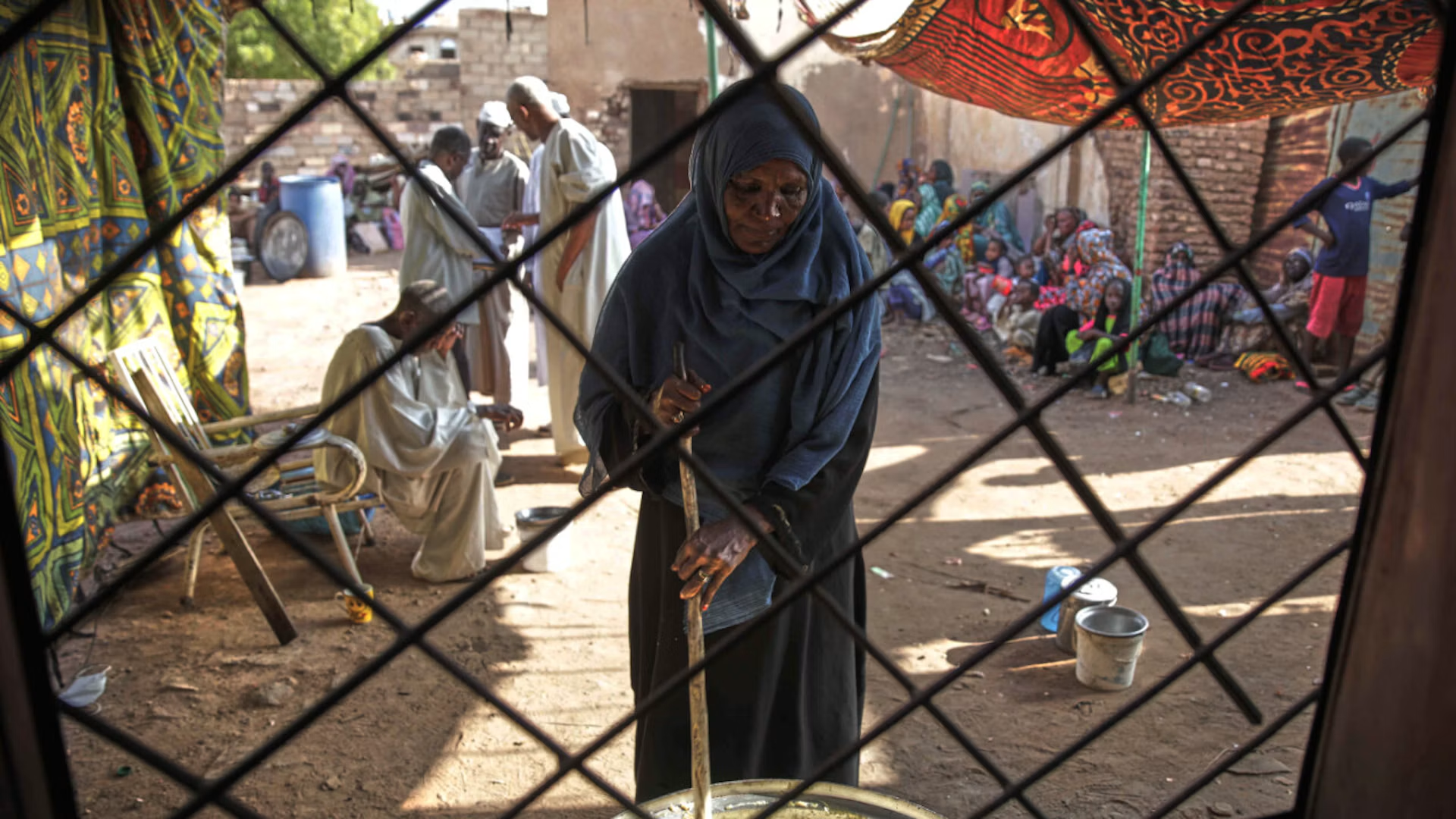
ARCHIVE – A woman prepares meals for people in need. Photo: Marwan Ali/AP/dpa
Keystone
The fight against hunger is making little progress worldwide. In sub-Saharan Africa, the situation has actually worsened since 2018. Seven of the eight countries facing an alarming hunger crisis are located there, as are the three largest acute food crises recorded worldwide. This is according to two reports released by aid organizations on World Food Day, October 16.

Today at 08:13
 Today at 08:13
While some countries are making significant progress, conflicts, displacement, and extreme weather events are exacerbating the suffering elsewhere. At the same time, there is less and less money available for humanitarian aid.
Two-thirds of acute hunger crises in ten countries
The Global Hunger Index, published by Welthungerhilfe and two partner organizations, rose from 17.6 to 18.1 points compared to the reference year of 2018. This marks the first time the global hunger situation has worsened in the data series, which dates back to 2000. Hunger has increased in 32 countries since 2018, and there has been little progress in 20 others. Sub-Saharan Africa has the highest index value of any region in the world.
A global analysis by Action Against Hunger shows just how concentrated acute food crises are in a small number of countries. According to the International Food Crisis Report, approximately 266 million people in 47 countries and territories were affected by high levels of acute food insecurity in 2025. Two-thirds of them lived in just ten countries. Nigeria, the Democratic Republic of the Congo, and Sudan together accounted for 82.9 million of those affected.
The UN Food and Agriculture Organization (FAO) reported a slight global decline in chronic hunger to 645 million people by 2025, primarily due to improvements in Asia, Latin America, and the Caribbean. However, this figure should not be equated with the number of people affected by acute food crises. The Global Hunger Index also takes into account undernourishment, child malnutrition, and child mortality.
Sudan
The war in Sudan, which has been ongoing since 2023, has triggered one of the most severe hunger crises in the world. In 2025, approximately 24.6 million people—nearly half the population—were affected by high levels of acute food insecurity. In 2025, famine was declared in the besieged cities of Al-Fasher and Kadugli. As of May 2026, 14 areas were still considered at risk of famine. This year, an estimated 825,000 children under the age of five are expected to be severely acutely malnourished. According to UN estimates, a total of 33.7 million people are in need of humanitarian aid.
Nigeria
According to the Global Hunger Index, no other country has seen its hunger situation deteriorate as sharply since 2018. The index score rose from 28.2 to 34.3 points, just below the threshold for the “alarming” category. According to Action Against Hunger, Nigeria faced the largest recorded acute food crisis in 2025, affecting 30.6 million people; for the 2026 hunger period, up to 34.7 million people were projected to be affected. In addition, there are an estimated 6.4 million acutely malnourished children under the age of five. In a country marked by enormous disparities in wealth, the crisis is hitting the poorer north particularly hard, where violence, high food prices, and flooding are exacerbating the hardship.
Democratic Republic of the Congo
With a score of 39.5 points, the Democratic Republic of the Congo is among the hardest-hit countries on the Global Hunger Index; the situation has worsened since 2018. According to Action Against Hunger, 27.7 million people suffered from high levels of acute food insecurity in 2025, more than 10 million of them in the conflict-ridden eastern provinces.
Fighting, displacement, and looting are hampering agriculture and trade, compounded by the current severe Ebola outbreak in the country. According to the organization, more than 1,000 nutrition centers were forced to close in 2025 due to cuts in aid funding. As a result, more than 390,000 children suffering from severe acute malnutrition lost access to treatment.
Conflicts are also fueling crises in other hotspots
Despite long-term progress, Somalia has the highest score of all countries assessed in the Global Hunger Index. More than half of the population is chronically undernourished. In South Sudan, more than half of the population was also affected by high levels of acute food insecurity at times in 2026. Outside of Africa, the number of people affected rose in 2025 compared to 2024—particularly in Myanmar by 2.3 million, in Afghanistan by 1.6 million, and in Yemen by 1.4 million.
According to the 2025 Global Hunger Index, conflicts were the main cause of acute food crises in 19 countries and territories, affecting 147.4 million people. Violence drives people from their fields and disrupts trade routes. Droughts, floods, and high prices exacerbate the hardship.
At the same time, funding for aid is declining: According to Action Against Hunger, funding for humanitarian food aid in crisis-stricken areas fell by 59 percent between 2022 and 2025. The cuts also jeopardize data collection and make it more difficult to assess the extent of the crises.