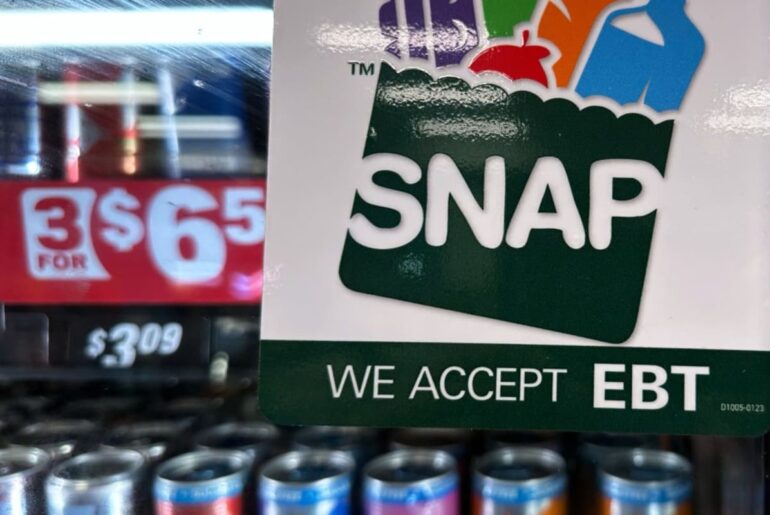

The number of people enrolled for federal food assistance has decreased by 13% since Republicans overhauled the program last July, to what one analysis says is the lowest number since 2009.
The Supplemental Nutrition Assistance Program had about 5 million fewer people enrolled in June than when the reconciliation law was signed in July 2025, according to the latest data published by the Department of Agriculture.
The Center on Budget and Policy Priorities, a left-leaning think tank, estimates that the drop includes about 2 million children.
The law expanded work requirements, tightened eligibility and shifted administrative and some benefit costs to states beginning in fall 2027.
“Even more people will likely lose SNAP in the coming months as states scramble to respond to this cost shift and fully implement the reconciliation law’s cuts and eligibility restrictions,” the think tank wrote in its analysis.
Enrollment has dropped faster than many expected, including the Congressional Budget Office, which projected earlier this year that 2 million more people would receive SNAP, commonly known as food stamps, in 2026 than the actual number of enrollees published by the USDA.
Large drops in some states have alarmed Democrats, who place the blame squarely on the Republican-led legislation. Participation has fallen since last summer in every state except Alaska.
Arizona saw the largest drop in SNAP enrollment of any state, with a 52% decline, the latest USDA data shows. The next-highest states — Nevada, Oklahoma and Louisiana — dropped more than 20%.
“This sad reality is the direct result of decisions made by Trump and Republicans in Congress,” Sen. Mark Kelly (D-Arizona) said in a statement. “They voted for these cuts despite our warnings about the harm they would cause.”
Kelly’s office said food bank staff told him in September that demand is rising, including among people who haven’t traditionally sought food aid, such as teachers, students, seniors and veterans.
Sen. Ruben Gallego (D-Arizona) said in a statement that expanded work requirements and cuts to federal support for SNAP administration are making it harder for eligible families to get the assistance they need.
“Now, more Arizona kids are going to bed with their stomachs rumbling while millionaires and billionaires make off like bandits,” Gallego said.
Democrats point to a rushed timeline required by the reconciliation bill, also known as H.R. 1, where states must reduce their SNAP error rate to under 6% — most commonly under- or overpayments to SNAP recipients — to avoid sharing some of the cost with the program that has been fully funded by the federal government for decades. The rules have left states scrambling to reduce their error rates to avoid paying hundreds of millions of dollars.
The USDA rejected the idea that the policy changes in the reconciliation bill are driving the drop.
“The number of individuals receiving benefits is constantly changing and is not representative of any one policy,” a department spokesperson said in a statement, adding that “multiple states saw declines far before the enactment of H.R. 1.” The spokesperson said households can leave SNAP after recertification because of a job or other changes in circumstances.
The spokesperson also pointed to a different trend: “As participation declines, the Department is seeing alarming trends in error rates, including anomalies that are indicative of attempts to game or undermine quality control,” the spokesperson said. The department did not say which states or what anomalies.
Republicans say the law’s changes were necessary. “Asking more Americans to pursue work, education or community engagement opportunities while ensuring SNAP is sustainable was the right thing to do and long overdue,” Sen. John Boozman (R-Arkansas), chairman of the Senate Agriculture Committee, said in a statement to The Washington Sun.
SNAP error rates and payments have become a key issue in the Senate over a new farm bill. Republicans and Democrats agree that states need more time to reduce error rates without being stuck with the bill, but they disagree on how long states should have to avoid payments.
State officials across the country have also advocated for a delay, telling The Sun earlier this year that many states and counties where SNAP is administered are unable to take on the responsibility in such a short period of time.
In September, the Senate Agriculture Committee advanced a farm bill on a party-line vote that would delay the cost shift by a year, while Democrats are still asking for a two-year delay. The bill needs 60 votes to pass the Senate, but without a delay, states will have to start paying part of SNAP benefit costs next fall.
“Congressional Republicans’ budget bill stripped food assistance away from millions of American families,” Sen. Amy Klobuchar, ranking member of the Senate Agriculture Committee, said in a statement. “That’s why I’m continuing to work with Sen. Boozman to pass a farm bill by the end of the year that will address the state cost shift and high food costs.”