
 6 min read
If you think all mayonnaise is the same, consider this your introduction to Japanese-style mayonnaise. This umami-rich condiment with a custardy texture belongs in your fridge for dipping, drizzling, spreading, and mixing.
Whether you’re curious about the spicy mayo at your favorite sushi spot or your For You Page is serving you konbini (convenience store) videos of creamy egg salad sandos in Tokyo, there are plenty of reasons to get familiar with Japanese mayo. On my first trip to Japan, I saw entire aisles devoted to different mayonnaise brands, flavors and mayo-based dressings. Here in the United States, we have a few standout brands—including Bachan’s new trio, which launches, October 26.
I tasted four brands to determine what makes each one different and how to use them in sandwiches, salads, and beyond. Here’s a look at the condiment’s history, flavor, and best uses.
What is Japanese-style mayonnaise?
Japanese mayonnaise was first made commercially by Kewpie in 1925. Its founder, Toichiro Nakashima, encountered mayonnaise during a visit to the United States and was inspired to bring it to Japan.
Kewpie’s original mayonnaise was made with egg yolks, which the company describes as highly nutritious. Nakashima was so insistent on using high-quality ingredients that Kewpie says it suspended production for five years during World War II because of ingredient shortages. Kewpie mayonnaise was sold in glass bottles before the company introduced its familiar squeeze bottle in 1958.

Irina Marwan//Getty Images
How is Japanese mayo different from American mayo?
The biggest difference is often the egg: Japanese-style mayo is commonly made with yolks only, while many American mayonnaises use whole eggs. But recipes vary by brand, and there’s no single formula for either style. Japanese-style mayo often has a richer, more egg-forward flavor and may include sugar, a variety of vinegars, and umami-rich ingredients such as MSG. American mayonnaise also varies, but often uses distilled vinegar and/or lemon juice.
Hellmann’s—known as Best Foods west of the Rocky Mountains—traces its history to a New York deli run by Richard and Margaret Hellmann. The company says Margaret’s mayonnaise was first sold in 1905. There are many Japanese-style and American mayonnaise brands, so Kewpie and Hellmann’s are better described as iconic examples than as the original brands in their respective countries.
Gary Webber//Getty Images
What does Japanese mayo taste like?
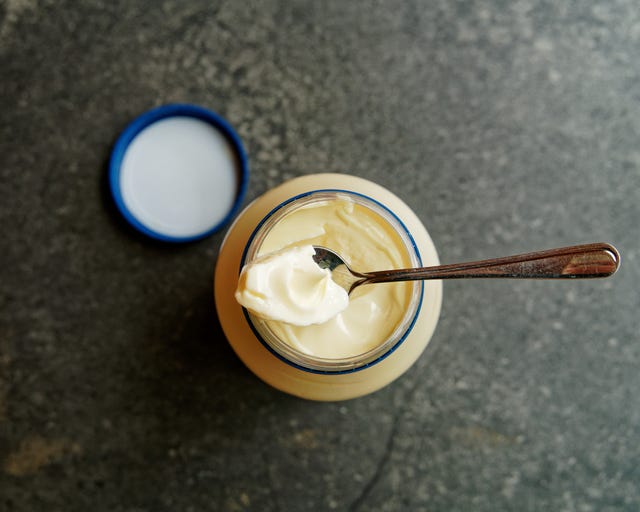
Japanese-style mayonnaise often tastes richer and more egg-forward than American-style mayo, with a creamy texture. Depending on the brand, it may also taste tangier, sweeter, or more savory. Ingredients such as MSG can add umami, while vinegar contributes acidity.
How to use Japanese mayo
The combination of zippy vinegar and underlying sweetness makes it a great dipping sauce for fries and chicken karaage (fried chicken). Other traditional Japanese dishes like okonomiyaki and sushi are often served with a drizzle of Japanese-style mayo. It’s also used in creamy salads and sandwiches, including egg salad, tuna, and potato salad.
If you’re used to American-style mayonnaise, some Japanese-style mayos may taste sweeter or tangier, so keep that in mind before making a one-to-one swap in a sandwich or dressing. The touch of sweetness and tang can balance salty or spicy flavors, such as a cheesy dip or spread, casserole, creamy potluck-ready salad, or anything spicy. And Japanese-style mayo is a key ingredient in Korean Corn Cheese!
Japanese mayo brands worth knowing
Good Housekeeping / Alyse Whitney
Kewpie is the best-known Japanese mayonnaise brand, and its enduring popularity around the globe led to the brand releasing For the Love of Kewpie cookbook in 2025 and taking its I Love Kewpie Food Truck Tour across California this month.
Ingredients: In the US, Kewpie sells original, organic, and sriracha-flavored varieties. The U.S.-made original lists soybean oil, egg yolks, several vinegars, MSG, sugar, and mustard flour among its ingredients. Kewpie’s flavor is distinct and recognizable in part because of its blend of vinegars, along with the balance of salt, sugar and MSG.
Flavor and best uses: The sriracha Kewpie brought heat right to the tip of my tongue, where it lingered. Though Kewpie leans sweet, the spice in this version is assertive and builds as you eat. This is perfect for dipping fried chicken; it would make an excellent sauce for poke or sushi, and could add a spicy kick to eggs or grilled cheese.

Good Housekeeping / Alyse Whitney
This brand was created by Japanese American women Eri Miyagi and Miki Nomura in 2022, and it launched Japanese-style mayo in October 2024. The brand’s current lineup includes original, spicy and wasabi varieties.
Ingredients: All three are made with rice bran oil, egg yolks, rice vinegar, sugar, salt and rosemary extract. Check the package for the latest ingredient list, since formulas can change.
Flavor and best uses: The original looks almost like lemon curd because of its yellow hue and texture. The flavor is well-rounded, balanced and distinctively egg-y. Those egg yolks really come through and leave a lingering flavor.
The spicy version is more of a salmon hue, with a subdued, smoky spice that builds. It’s made with amazake (fermented koji and rice), yuzu juice, red chili, garlic powder, and white pepper, and gets extra zip from the citrus and vinegar.
The wasabi version adds wasabi powder and has a noticeable kick, though I didn’t find it overpowering. Pairing any of these with fish recipes (fried, grilled or smoked) and vegetables would be a home run.

Good Housekeeping / Alyse Whitney
Hellmann’s, known as Best Foods west of the Rocky Mountains, calls its product Japanese-inspired mayonnaise and dressing. The brand launched it in March 2026.
Ingredients: Canola oil, whole eggs, and egg yolks (the only brand in this tasting to use both), distilled vinegar, sugar, salt, MSG, lemon juice concentrate, and paprika extract and beta-carotene for color.
Flavor and best uses: It’s the thickest of all the brands I tried and has a nice tang and underlying sweetness. It tastes less complex than Kewpie, which has a more layered flavor from its blend of vinegars, but is the closest in color and flavor to the original. Its thick texture makes it a good spread for sandwiches, while its tangy, savory flavor works well drizzled over tonkatsu or a rice bowl.

Good Housekeeping / Alyse Whitney
The popular Japanese barbecue sauce brand founded by Japanese American entrepreneur Justin Gill launched in 2013, and after four years in development is launching its mayonnaise on October 26. It will first be available exclusively at Whole Foods with three flavors: original, spicy, and black garlic.
Ingredients: The varieties are made with expeller-pressed high-oleic sunflower oil, free-range egg yolks, cane sugar, aged rice vinegar, white vinegar, sea salt, yeast extract, lemon juice concentrate, rosemary extract, and mustard flour.
Flavor and best uses: The combination of lemon and two vinegars creates a bright acidic pop in the original, followed by a rich, sweet-savory flavor. It is incredibly flavorful and layered, and the viscosity is a bit thicker than Kewpie.
The spicy version is almost a guava-pink hue from three sources of chile: red jalapeño, habanero, and cayenne pepper. It has a tangy acidity that balances the heat. The spice builds at the back of the throat and made me sweat a little—in a good way.
The black garlic is by far my favorite of the nine Japanese-style mayonnaises I tested (tasting each on its own and with chicken nuggets). There is so much umami and a fermented complexity balanced by the black garlic’s sweetness. It’s thick and ideal for dipping anything from a french fry to a dumpling. Thin it with a little vinegar to make a dressing for hearty greens like kale or roasted vegetables.
Bottom Line
Japanese-style mayo can bring a richer, tangier, more savory note to dips, sandwiches, salads and other dishes. The flavor and texture vary by brand, so the best one for you depends on how you plan to use it. I tried four options—Kewpie, Cabi Foods, Hellmann’s, and Bachan’s—and found plenty of ways to put each to work, from dipping fries and chicken to dressing up a rice bowl or creamy salad.