
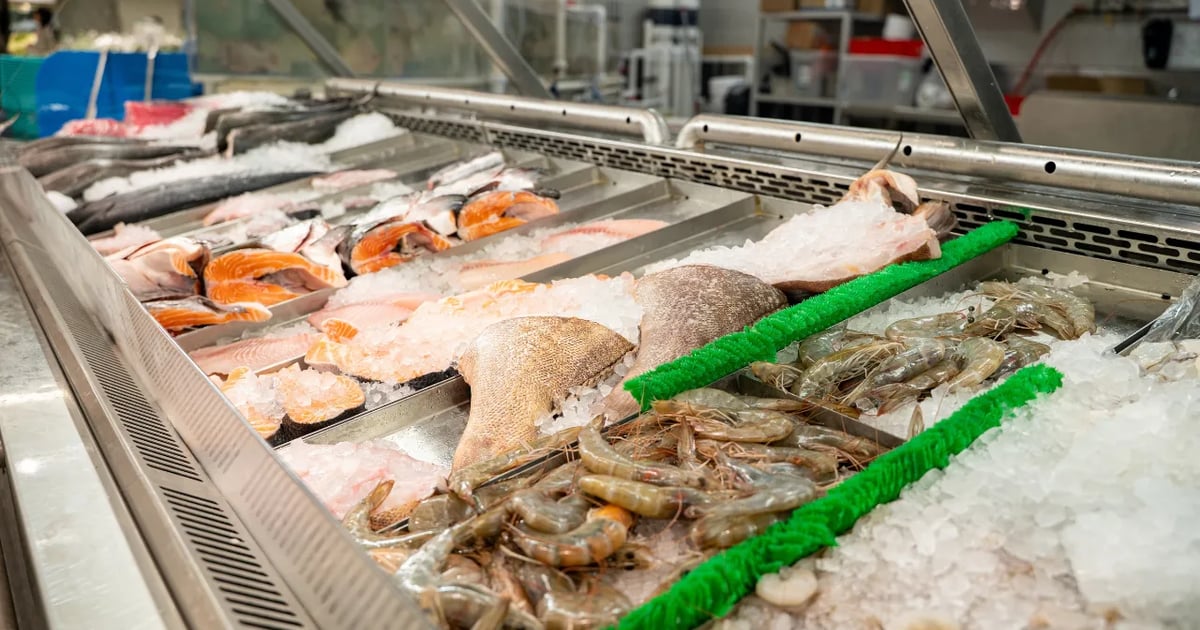
“Keep it simple” is becoming an important mantra for increasing seafood department activity.
Many retailers are squandering sales opportunities by making it difficult for consumers to shop the seafood case, said Chris DuBois, senior vice president, perimeter practice leader, for Circana, a Chicago-based market research firm. That includes providing consumers with unnecessary and confusing information at the point of sale, he said, such as technical data on product certifications and product sizing.
“Seafood customers typically take 17 seconds to make a purchasing decision,” DuBois said. “It is easy for them to trade off to pork and beef” if the shopping is difficult.
Merchandisers should emphasize seafood cooking times; ease of preparation; recipes; product origin; grams of protein per serving; and how seafood contributes to brain health because of omega-3 fatty acids, he said. “Consumers get tired of seeing signage with industry jargon,” DuBois said. “Messaging should reveal how the product makes life better. That occurs in the center store aisles but rarely with seafood.”
DuBois said that while industry language might be important during business-to-business transactions, it is preventing retailers from “bringing more shoppers into the mix. It is important to provide information that can make a difference.”
In addition to proper messaging, operators should have selections that match the unique shopper expectations in each location, he said. Many discount store customers, for instance, are primarily seeking the most popular species but at lower prices, DuBois said.
“Getting assortments right is the hardest part,” he said “Seafood merchandising is not, and has never been, easy. It is challenging to manage selections when dealing with products with a short shelf life.”
Analyzing shopper behavior and their species preferences at each store is vital, DuBois said, particularly because more consumers are shopping for seafood at a variety of retail channels. That is reflective in the strong sales growth of the most popular species, he said. Volume sales for salmon, for instance, rose 3.8% to 373 million for the 52 weeks ending Nov. 1, despite an average 2% price increase to $11.71 a pound, Circana reports.
In addition, tilapia volume sales grew 1.6% to 48.5 million with a 5.2% price increase to $6.28 a pound, and trout sales were up 4.5% to 28.1 million with a 3.5% price gain to $9.78 a pound.
“Higher prices are causing even higher-income consumers to shop at different locations, such as Walmart or Aldi,” DuBois said. “Seafood is becoming more of a traffic driver.”