
We deliver knowledge on Health & Nutrition, Food, Healthy Recipes, and Lifestyle Choices Based on Science Studies.
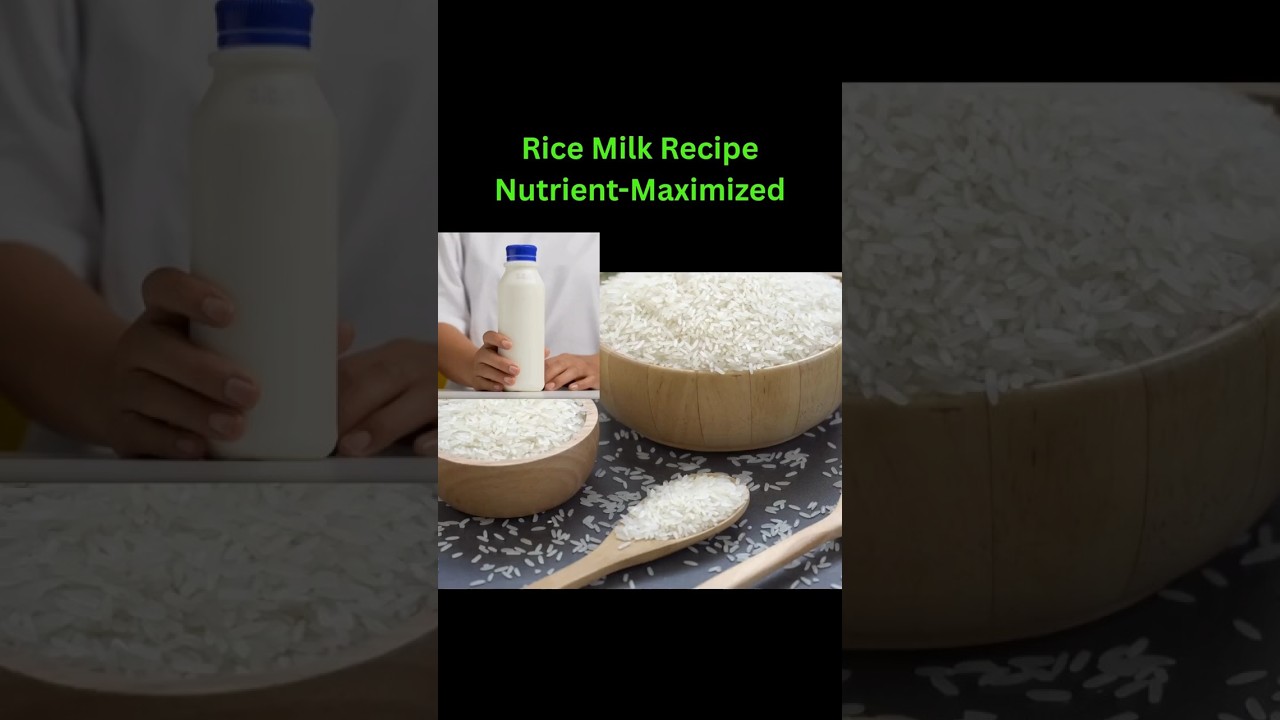
Homemade rice milk is healthier because it will be free of dangerous preservatives. You can use both white and brown rice.
1. Base Preparation
Washing & Soaking: Wash rice properly with running water before soaking. Now soak rice in filtered water. Soak till the rice sprouts or germination starts. Sprouting increases bioavailability of vitamins.
2. Cooking Method
Cook on low to medium heat for short time. It helps starch breakdown for creaminess while retaining heat-sensitive nutrients. Over cooking reduces antioxidant activity and some B-vitamins.
3. Blending
Blend on high speed for 4 minutes or until liquid is milky and the rice is finely blended.
4. Filtration vs. Whole Blend
For maximum nutrient retention, avoid straining. If straining, then use cheesecloth or milk nut bag to strain.
5. Rice Milk Storage
Now store the prepared rice milk in an airtight glass bottle in a refrigerator.
For more nutritional information, please subscribe the channel.
References and Citations:
1. Ribotta, P. D., & León, A. E. (2012). Effects of processing on nutritional value of plant beverages. *Food Research International, 47*(2), 488–493. [DOI: 10.1016/j.foodres.2012.03.011]
2. González, R. J., & Torres, R. L. (2019). Enzymatic hydrolysis in rice beverage production: nutritional implications. *Journal of Food Science and Technology, 56*(3), 1145–1153. [DOI: 10.1007/s13197-018-3524-3]
3. Jeske, S., Zannini, E., & Arendt, E. K. (2017). Past, present and future: The strength of plant-based dairy substitutes. *Food Research International, 110*, 42–51. [DOI: 10.1016/j.foodres.2017.03.045]
4. Chalupa-Krebzdak, S., Long, C. J., & Bohrer, B. M. (2018). Nutrient profile of plant-based beverages vs. cow’s milk. *Journal of Food Science, 83*(11), 3050–3057. [DOI: 10.1111/1750-3841.14319]
5. Jeske, S., & Arendt, E. K. (2018). Technological aspects of producing rice milk by enzymatic hydrolysis. *Cereal Chemistry, 95*(4), 638–647. [DOI: 10.1002/cche.10059]
6. Díaz, M., et al. (2019). Effect of sprouting on nutritional quality of rice and derived beverages. *Food Chemistry, 288*, 369–376. [DOI: 10.1016/j.foodchem.2019.02.140]
7. Kahlon, T. S., & Chiu, M. C. (2015). Nutritional comparison of rice milk, almond milk, and soy milk. *Nutrition & Food Science, 45*(2), 168–179. [DOI: 10.1108/NFS-05-2014-0042]
8. Singhal, S., Baker, R. D., & Baker, S. S. (2017). A comparison of the nutritional value of cow’s milk and nondairy beverages. *Journal of Pediatric Gastroenterology and Nutrition, 64*(5), 799–805. [DOI: 10.1097/MPG.0000000000001380]
9. Mäkinen, O. E., Wanhalinna, V., Zannini, E., & Arendt, E. K. (2016). Foods for special dietary needs: plant-based substitutes. *Critical Reviews in Food Science and Nutrition, 56*(3), 339–349. [DOI: 10.1080/10408398.2012.761950]
10. Vanga, S. K., & Raghavan, V. (2018). How well do plant-based alternatives fare nutritionally compared to cow’s milk? *Journal of Food Science and Technology, 55*(1), 10–20. [DOI: 10.1007/s13197-017-2915-y]
……………………………………………………………………………………………………………….
#nutrition #foods #health #wellness #lifestyle #recipes
Disclaimer: This YT channel is for educational purposes only and is not a substitute for professional advice. Video Material has been taken from Scientific Journal Articles. Citations & References can be checked in video Description.
Please follow us on Social Media:
https://www.instagram.com/thefoodsciences/
For inquiries: lubnanaz1975@gmail.com
Video Background Music: YouTube Audio Studio & Canva Pro Audios
VoiceOver: Google AI Studio
Images & Videos: AI-Generated and Canva Pro
Disclaimer: Our videos are made with the purpose of bringing awareness and knowledge to the viewers. All the information delivered in the video is correct to the best of our team’s research. If anyone finds any blunder, kindly email us at (lubnanawaz2020@gmail.com) with the subject (YouTube Video Feedback) to resolve the error graciously.