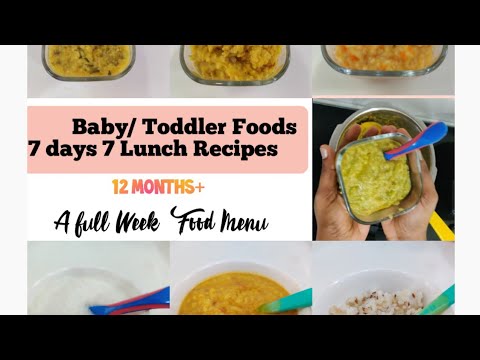
#BabyFood #7days7LunchIdeas #FullWeekMenu
Nutritional values :
White Rice
Rich in calcium and Iron
Brown Rice
Also rich in calcium and Iron. Loaded with B3, B1, B6, Manganese, Selenium, Fibre and essential fatty acids.
Moong Dal
Moong Dal is less allergic and easy digestible. After 6 months you can begin with Moong dal and later can introduce other dals like Toor dal.
Benefits of Dals
Dal is rich in Zinc, Iron and Manganese. It benefits the baby’s growth.
Tomato
Rich in Vitamin C. When added to rice helps in Iron absorption that presents in Rice. Tomatoes are not recommended for babies less than 10 months due to the presence of high acidity in tomatoes which may upsets the little Tummy
Onion
Excellent source of Antioxidants. It also have anti-inflammatory property.
Rich in Vitamins and boost the Immune System.
Turmeric
Contains Cucumin, an Antioxidant with Anti-Inflammatory Powers.
Cumin
Aids in Immune function. Its Anti-bacterial and Anti – Fungal.
Pepper
Aids in digestion and breakdown the food
Asafoetida (Hing)
It’s an Indian Super food that is very popular for Colon Cleaning properties. Good for Oral Health and Proper digestion of food.
Spinach for babies
Spinach has a high amount of water in it which keeps the baby hydrated.
Good for Bone and Muscle development. Natural Laxative and helps in good Bowel movement.
Broken Wheat/Daliya
Broken wheat is a good source of minerals, primarily phosphorus, magnesium, and iron. All of these are extremely vital in the development of the child, both physical as well as mental, and provide the support to be a healthy individual
Potato
Potatoes can help develop your baby’s gastrointestinal health- only if consumed non fried. Potatoes assist in the growth of friendly bacteria. The substantial amounts of alkaline sugars in potatoes keep the acid levels down in your baby’s body and thus keep acidity at bay
Carrot
Carrots are also a good source of other vitamins, like vitamin K, which helps blood clot properly, and vitamin B6, which is necessary for skin, hair, eye, and liver health. They’re a good source of fiber
Peas
Rich in Calcium, Vitamin A and C and Iron too. These wonderful little vegetables are a great first “green” food for baby as they are nutritious, and mostly pleasant to eat.
Broccoli
Broccoli is very high in Vitamin C and is a great source of soluble fiber. This makes broccoli wonderful to add to baby food recipes. Soluble fiber is the fiber that helps loosen up the bowels as it changes its form as it passes through the digestive tract.
Radish
Radishes have a decent amount of vitamin C, as well as B-vitamins, folate, and minerals
Bottle Gourd
Helps in better digestion and treats constipation, good for skin and hair also provides a cooling effect in the body. Bottle gourd can be given to babies from 6 months, and you can start with plain bottle gourd puree
Garlic
For babies, garlic helps support healthy blood circulation and balanced blood sugar. It also contains anti-inflammatory properties, which help virtually every system in the body, and offers potent antimicrobial qualities that help kill bugs that cause colds and infections
Ghee
Ghee is high in calories, and, thus, helps babies gain weight after being weaned from breast milk. Ghee contains DHA, which helps in brain development and improves memory.
Curd/Yogurt
Its nutritional profile boasts important nutrients for babies such as calcium and phosphorus for bone strength and protein and fat for babies’ rapid growth. In addition, the active live cultures in yogurt make the lactose and protein in milk easier to digest.
-Jan