
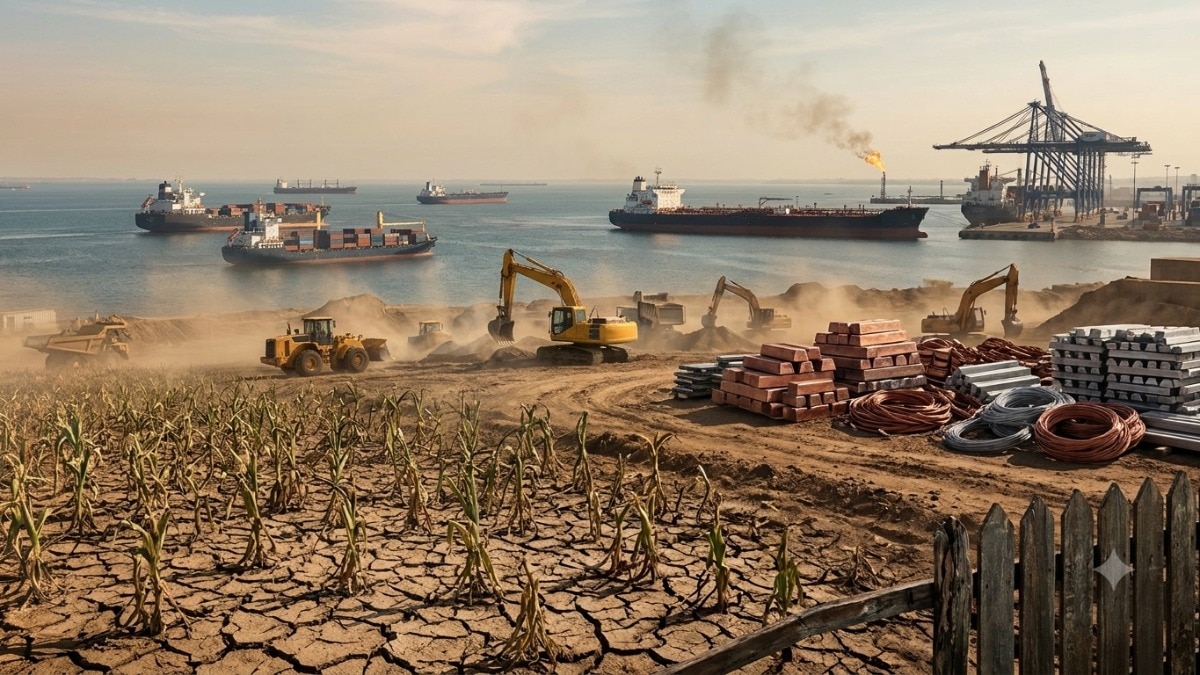
The historic disruption to energy supplies, spearheaded by the West Asia conflict, has drawn down global oil inventories and is set to propel energy prices upward by 32% in 2026, reversing three consecutive years of declines. Brent crude oil is forecast to average $91 per barrel in 2026 — up sharply from $69 per barrel in 2025 — before easing to $79 per barrel in 2027.
Energy markets under severe strain
The crisis in the Middle East has dealt a massive blow to energy production, with global oil supply projected to fall by 5.2% (5.5 million barrels per day) in 2026, marking the largest decline in over four decades outside of the 2020 global recession.
Although global oil consumption is simultaneously expected to contract by 2.5% — the third-largest annual drop on record — production shortfalls have forced continuous withdrawals from oil inventories, leaving global markets acutely exposed to fresh disruptions.
Refined product markets have experienced even more acute tightness. Shortages of diesel and jet fuel have driven refining spreads beyond historical norms, prompting International Energy Agency (IEA) member countries to agree to release 100 million barrels of oil reserves through January 2027.
Meanwhile, European natural gas prices — heavily dictated by spot liquefied natural gas (LNG) imports — are projected to spike by nearly 60% in 2026 due to restricted shipments through the Strait of Hormuz.
Food & agricultural pressures mount
Agricultural and food commodity markets are wrestling with overlapping pressures from high energy and fertilizer input costs, trade disruptions in the Black Sea, and a very strong El Niño. Food commodity prices are on track to climb by 10% in 2026 and an additional 7% in 2027, resulting in a cumulative two-year increase of 18%.
Grains and oils: Grain prices are projected to jump 14% in 2026 and another 9% in 2027, driven by severe weather impacts and diminished export flows from major breadbasket regions.
The El Niño factor: The current El Niño episode is expected to be the strongest since 1950, threatening harvests for key tropical commodities such as rice, palm oil, sugar, and coffee. Palm oil and rice prices face substantial upward pressure as dry conditions affect Southeast Asian producers.
Beverages: In contrast to food crops, the beverage price index is expected to plunge by 24% in 2026 as coffee and cocoa production recovers from prior disease- and weather-related slumps, before stabilizing modestly in 2027.
Metals hit new highs amid energy transition
Metals and minerals prices are charting a historic trajectory, set to scale a new peak with a 25% increase in 2026. Base metals including aluminum, copper, and tin have all hit record highs, fueled by robust structural demand from renewable energy infrastructure, electric vehicles, and data centers, alongside localized supply disruptions.
Concurrently, precious metals are forecast to surge by 40% in 2026 as heightened geopolitical and policy uncertainty drives strong safe-haven demand for gold, silver, and platinum.
The baseline projections rely heavily on the assumption that regional conflicts do not sharply intensify and that Black Sea and Gulf shipping routes progressively stabilize. However, risks are heavily tilted toward higher prices.
In an adverse scenario — where Middle East hostilities re-escalate, Russian infrastructure outages persist, and El Niño impacts peak — Brent crude could average $105 per barrel in 2027, and food commodity prices could surpass their 2022 levels, exacerbating global inflation and food insecurity.
To help vulnerable emerging markets and developing economies manage these systemic shocks, the World Bank Group has made $50 billion to $60 billion available through existing instruments, prioritising social safety nets, fiscal capacity, and economic resilience.


