
🔍🥚 Whole Egg vs Egg White: The Ultimate Weight Loss Showdown! 🍳✨
Curious about which egg option reigns supreme for shedding those extra pounds? In this enlightening video, we dive deep into the battle between whole eggs and egg whites! Discover the nutritional benefits, calorie counts, and protein profiles of each option, along with expert insights on how they impact weight loss. 🏋️♂️ Watch till the end for delicious recipe ideas that will supercharge your meal prep! 🍽️💚
Hit subscribe for more healthy eating tips, and join the conversation in the comments below! Which do you prefer, and why? Let’s crack this case together! 🥚💪 #WeightLoss #Eggs #healthyeating
Let’s take a deep dive into the nutritional values of whole eggs vs. egg whites, including vitamins and minerals, and how each impacts weight loss.
1. Calories
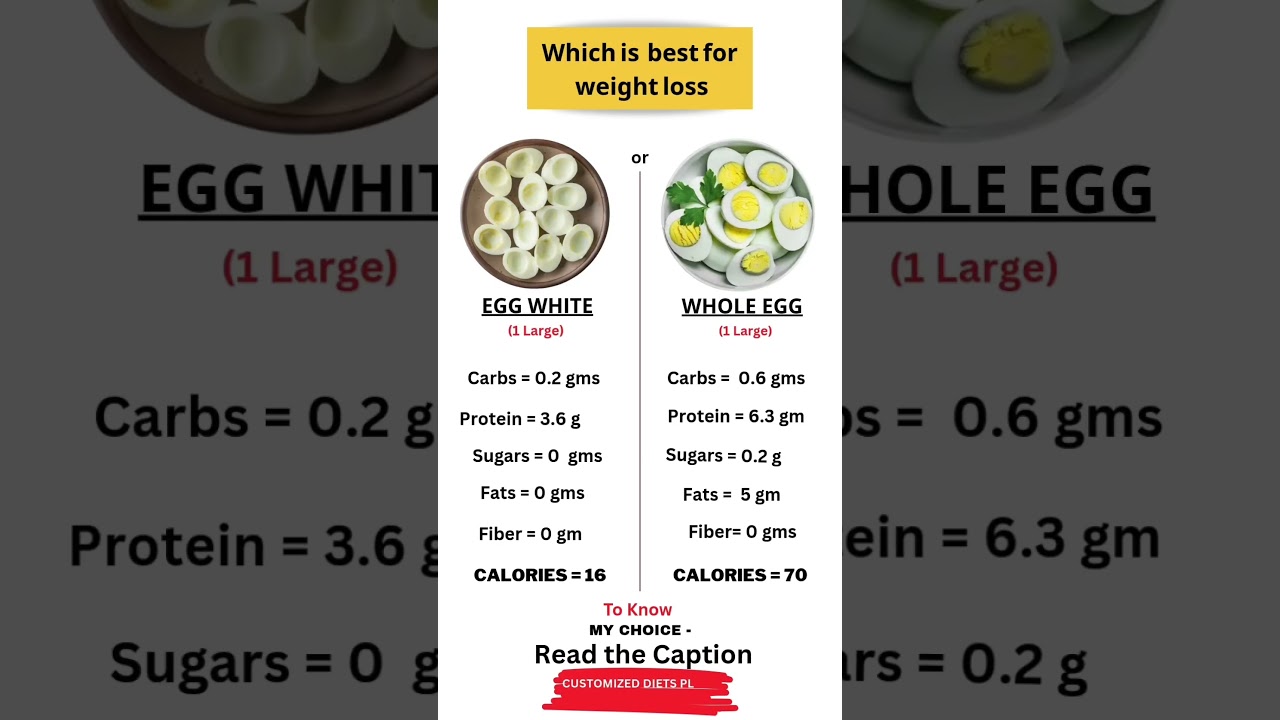
Whole Egg (1 large) → ~70 kcal
Egg White (1 large) → ~15–17 kcal
🔑 For weight loss: Egg whites are very low in calories, but whole eggs offer more nutrients per calorie.
2. Protein
Whole Egg → ~6 g
Egg White → ~3.6 g
🔑 Protein helps build lean muscle and keeps you full. Egg whites are pure protein, but whole eggs provide complete protein with all essential amino acids.
3. Fats
Whole Egg → ~5 g (1.6 g saturated, rest unsaturated)
Egg White → 0 g
🔑 Healthy fats in whole eggs support hormone balance (important for fat burning) and provide satiety. Egg whites don’t have this benefit.
4. Carbohydrates
Both have less than 1g carbs.
🔑 Great for low-carb or keto weight-loss diets.
5. Cholesterol
Whole Egg → ~186 mg
Egg White → 0 mg
🔑 Cholesterol in eggs doesn’t significantly raise blood cholesterol for most people, but whole eggs should be eaten in moderation if you have cholesterol issues.
6. Vitamins
Whole Egg:
Vitamin A → Good for vision, skin, and immune system.
Vitamin D → Helps calcium absorption, supports metabolism, and may aid fat loss.
Vitamin E → Antioxidant, protects cells.
Vitamin K → Helps blood clotting and bone health.
Vitamin B2 (Riboflavin) → Energy metabolism.
Vitamin B5 (Pantothenic acid) → Fat and carbohydrate metabolism.
Vitamin B6 → Supports protein metabolism.
Vitamin B12 → Important for red blood cells and energy production.
Folate (B9) → DNA repair and cell growth.
Choline → Boosts brain health and helps in fat metabolism.
Egg White:
Contains small amounts of B vitamins (riboflavin, niacin), but very minimal compared to whole egg.
🔑 For weight loss: Whole eggs clearly win here — more vitamins to keep energy, metabolism, and health strong.
7. Minerals
Whole Egg:
Iron → Carries oxygen, prevents fatigue.
Zinc → Boosts metabolism and immunity.
Phosphorus → Supports bone and energy production.
Selenium → Antioxidant, supports thyroid function.
Calcium (small) → Bone and muscle function.
Magnesium (small) → Helps metabolism and muscle health.
Egg White:
Selenium → Present, but much less than whole egg.
Trace minerals only, very limited.
🔑 Whole eggs are nutrient-rich, while egg whites are mainly protein.
8. Satiety Value
Whole Eggs → Protein + fat = slow digestion, longer fullness.
Egg Whites → Pure protein = quick digestion, less filling.
Final Verdict
Whole Eggs → Best for overall health, satiety, and balanced nutrition.
Egg Whites → Best for low-calorie, high-protein diets (bodybuilders, strict fat loss).
Best Strategy → Combine them! Example: 2 whites + 1 whole egg = high protein, low calorie, but still packed with nutrients.