Are you unknowingly ruining your food by storing it the wrong way? In this video, we reveal the most common food storage mistakes that can affect freshness, taste, and even your health.
From fruits and vegetables to pantry staples, proper storage plays a crucial role in preserving nutrients and preventing food waste. Learn the correct ways to store everyday foods so they last longer and stay fresh.
These simple changes can save money, improve food quality, and help you maintain a healthier lifestyle.
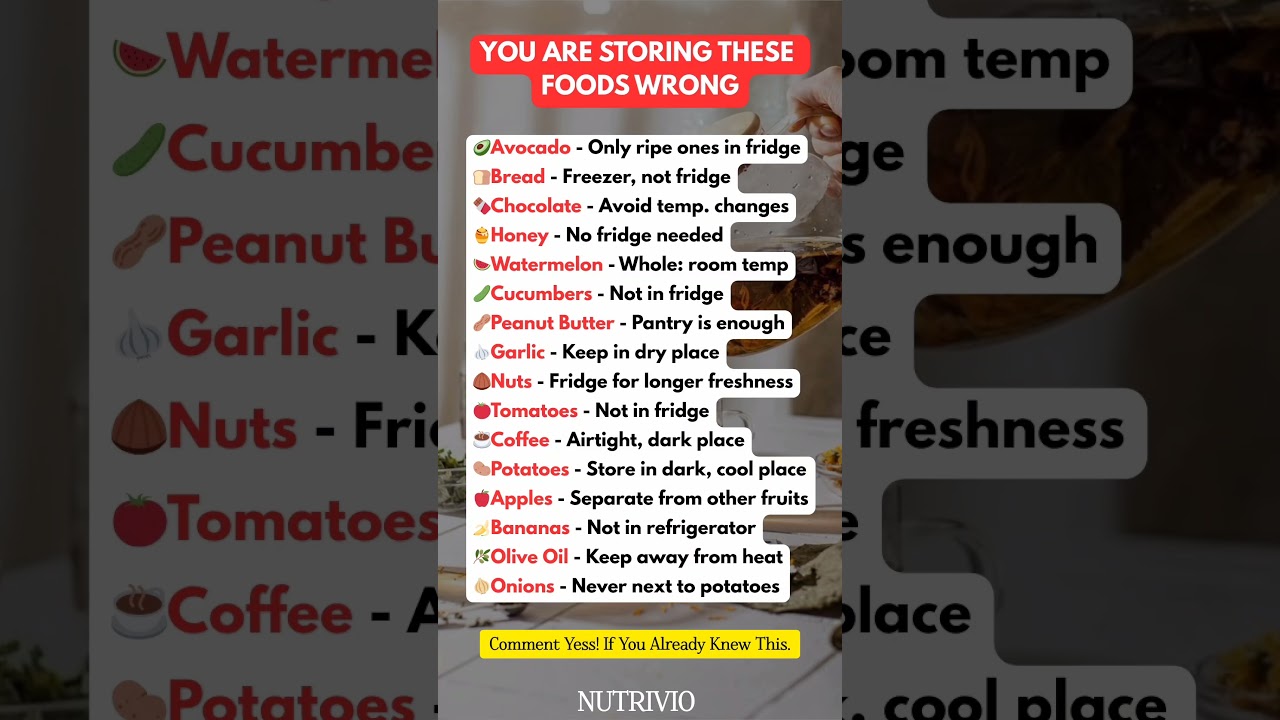
1. Avocado – Only Ripe Ones in Fridge
Unripe avocados should be kept at room temperature to ripen properly. Once ripe, refrigerate them to slow down spoilage.
2. Bread – Freezer, Not Fridge
Refrigerating bread makes it stale faster. Instead, store it in the freezer to maintain freshness and texture for longer.
3. Chocolate – Avoid Temperature Changes
Frequent temperature changes cause chocolate to develop a white coating (bloom). Store it in a cool, stable environment.
4. Honey – No Fridge Needed
Honey naturally preserves itself. Refrigeration causes it to crystallize, so keep it at room temperature.
5. Watermelon – Whole: Room Temperature
A whole watermelon should be stored at room temperature. Once cut, it should be refrigerated to maintain freshness.
6. Cucumbers – Not in Fridge
Cucumbers are sensitive to cold and can become mushy in the fridge. Store them at room temperature for better texture.
7. Peanut Butter – Pantry Is Enough
Peanut butter doesn’t need refrigeration. Keep it in a cool, dry pantry to maintain its consistency and flavor.
8. Garlic – Keep in Dry Place
Store garlic in a dry, well-ventilated place. Moisture can cause sprouting or mold growth.
9. Nuts – Fridge for Longer Freshness
Nuts contain healthy fats that can go rancid. Refrigeration helps extend their shelf life and maintain quality.
10. Tomatoes – Not in Fridge
Cold temperatures ruin the flavor and texture of tomatoes. Store them at room temperature for best taste.
11. Coffee – Airtight, Dark Place
Exposure to air, light, and moisture can degrade coffee quality. Store it in an airtight container in a dark place.
12. Potatoes – Store in Dark, Cool Place
Potatoes should be kept in a cool, dark area. Light exposure can cause them to turn green and produce toxins.
13. Apples – Separate from Other Fruits
Apples release ethylene gas, which can speed up ripening of nearby fruits. Store them separately to prevent spoilage.
14. Bananas – Not in Refrigerator
Refrigeration slows ripening but damages the peel and texture. Keep bananas at room temperature.
15. Olive Oil – Keep Away from Heat
Heat and light degrade olive oil quality. Store it in a cool, dark place to preserve its nutrients.
16. Onions – Never Next to Potatoes
Onions and potatoes release gases that cause each other to spoil faster. Always store them separately.
#FoodStorage #KitchenTips #HealthyHabits #FoodTips #NutritionTips #HealthyLiving #KitchenHacks #FoodWaste #SaveFood #HealthyLifestyle #FoodAwareness #StorageTips #HomeTips #CookingTips #FreshFood #EatHealthy #SmartKitchen #FoodEducation #DailyTips #HealthyChoices #CleanEating #FoodSafety #PantryOrganization #KitchenGuide #NaturalLiving #HealthyKitchen #FoodFacts #DietTips #WellnessTips #SimpleHabits #BetterLiving
food storage tips, common food storage mistakes, how to store food properly, kitchen storage hacks, fruits and vegetables storage tips, how to keep food fresh longer, proper food storage guide, avoid food waste tips, healthy kitchen habits, storing fruits correctly, storing vegetables correctly, pantry storage tips, refrigerator mistakes, food safety tips, kitchen organization ideas, how to store bread, avocado storage tips, banana storage tips, potato storage guide, onion storage mistakes, coffee storage tips, olive oil storage, honey storage facts, peanut butter storage tips, nuts storage tips, tomato storage guide, cucumber storage tips, watermelon storage tips, garlic storage tips, apple storage tips, healthy food habits, nutrition awareness tips