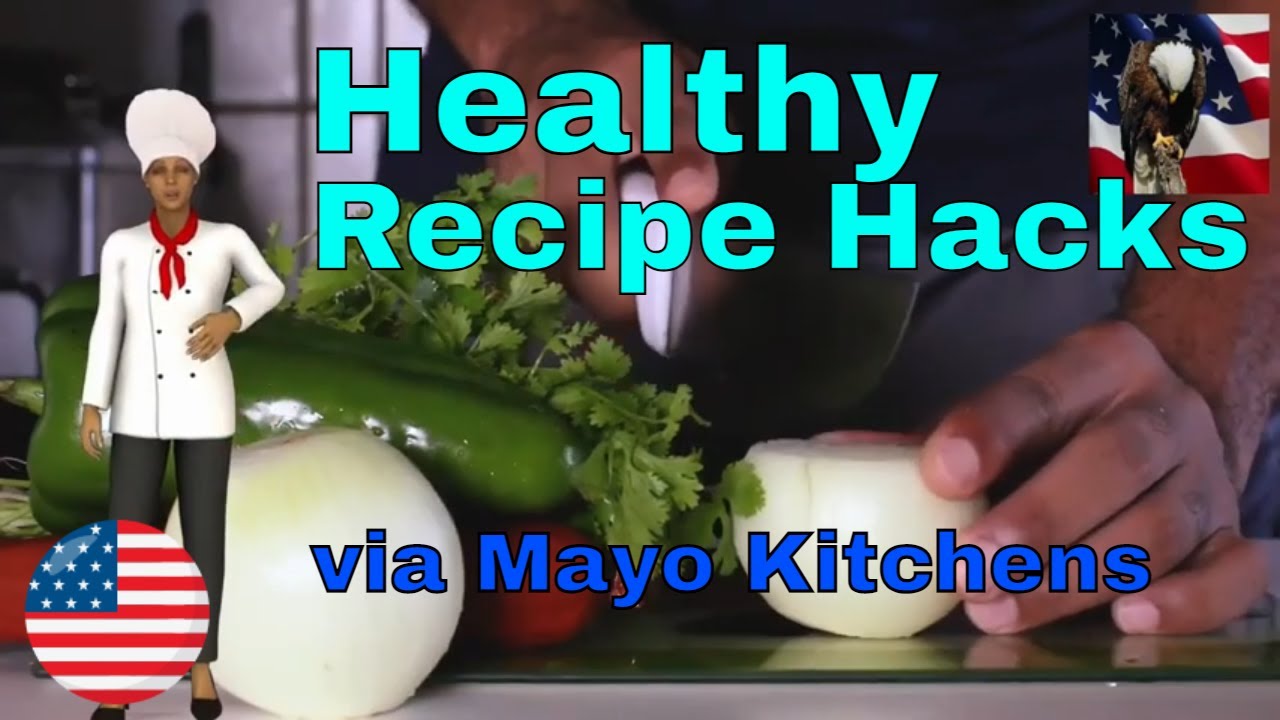
America Newscape shares Perfect Healthy Recipe Hacks via Mayo Kitchens
Can you call your grandmother’s beloved bread pudding a healthy recipe? Scrumptious as it may be with 4 cups of whole milk, one stick of butter and four eggs, you probably wouldn’t find it on a list of healthy recipes.
But you don’t have to remove it from your recipe box. Just modify that bread pudding with a few simple change-ups, and you’ve got another healthy recipe for your collection — not a fat and calorie disaster.
In fact, your ingredient substitution talents can help transform many unhealthy recipes into healthy recipes — and without diminishing the taste or texture of the foods you enjoy.
Here are five techniques you can use to help create healthy recipes. Remember, these are just some examples. Use your imagination and experiment to find other ways to create healthy recipes — you may even make your grandmother proud.
1. Reduce the amount of fat, sugar and salt
You often can reduce the amount of fat, sugar and salt without sacrificing flavor in healthy recipes. Use these general guidelines:
Fat. For baked goods, use half the butter, shortening or oil and replace the other half with unsweetened applesauce, mashed banana or prune puree.
Sugar. Reduce the amount of sugar by one-third to one-half. Instead, add spices such as cinnamon, cloves, allspice and nutmeg, or flavorings such as vanilla or almond extract to boost sweetness.
Salt. For most main dishes, salads, soups and other foods, you can reduce the salt by half or even eliminate it. You can reduce salt by half in baked goods that don’t require yeast too.
2. Make a healthy substitution
Healthy substitutions not only reduce the amount of fat, calories and salt in your recipes but also can boost the nutritional content.
Pasta. Use whole-wheat pasta instead of enriched pasta. You’ll almost triple the fiber.
Milk. Prepare a dessert with fat-free milk instead of whole milk to save more than 60 calories and 7 grams of fat per cup.
Meat. When making casseroles, scale back on meat, poultry or fish and increase the amount of vegetables. You’ll save on calories and fat while gaining more vitamins, minerals and fiber.
Toppings. Eliminate items you generally add out of habit or for appearance, such as frosting, coconut or whipped cream toppings, which are all high in fat and calories.
Condiments. Cut condiments, such as pickles, olives, butter, mayonnaise, syrup, jelly and mustard, which can have large amounts of salt, sugar, fat and calories. Use fresh condiments such as cucumbers vs pickles, cherry tomatoes vs olives, non-fat or reduced fat spreads vs butter or mayonnaise. Instead of syrup or jelly, try fresh berries that are mashed, or thin slices of fresh apples, peaches or pears. Use low-sodium soy sauce in a smaller amount than a recipe calls for to decrease the amount of salt.
Cheese. If a recipe calls for 1 cup of shredded cheddar cheese, use 1/2 cup instead.
4. Change cooking and prep techniques
Healthy cooking techniques can capture the flavor and nutrients of your food without adding excessive amounts of fat, oil or salt. Try these preparation techniques for healthy recipes.
Cooking method. Healthy cooking techniques include braising, broiling, grilling, poaching, sauteing and steaming.
Basting liquid. If the directions say to baste the meat or vegetables in oil or drippings, use a small amount of wine, fruit juice, vegetable juice or fat-free vegetable broth instead.
Nonstick cookware. Using nonstick pans or spraying pans with nonstick spray will further reduce the amount of fat and calories added to your meals.
5. Downsize the portion size
No matter how much you reduce, switch or omit ingredients, some recipes may still be high in sugar, fat or salt. You can help your diet by cutting back on the portion size instead.
Slow down. Eat your meals more slowly to give your body a chance to register the fact that you’re filling up. Put your fork down between bites if necessary. You’ll eat less in the long run.
Check portion sizes. Many portions today are so large you may not realize what a true portion or serving is. Train yourself by using smaller plates, spoons and cups.
Plan ahead when eating out. It’s easy to go overboard when eating out. Take precautions such as splitting a dish with a dining companion, skipping the bread basket, or asking for a doggie bag and packing up half your meal.
Find more health and medical information on
America Newscape is a simple resource for all things America through this portal. These productions are not created or meant for children.
YouTube:
FaceBook:
Twitter:
Instagram: