Aunt Jackie’s Pea Salad:
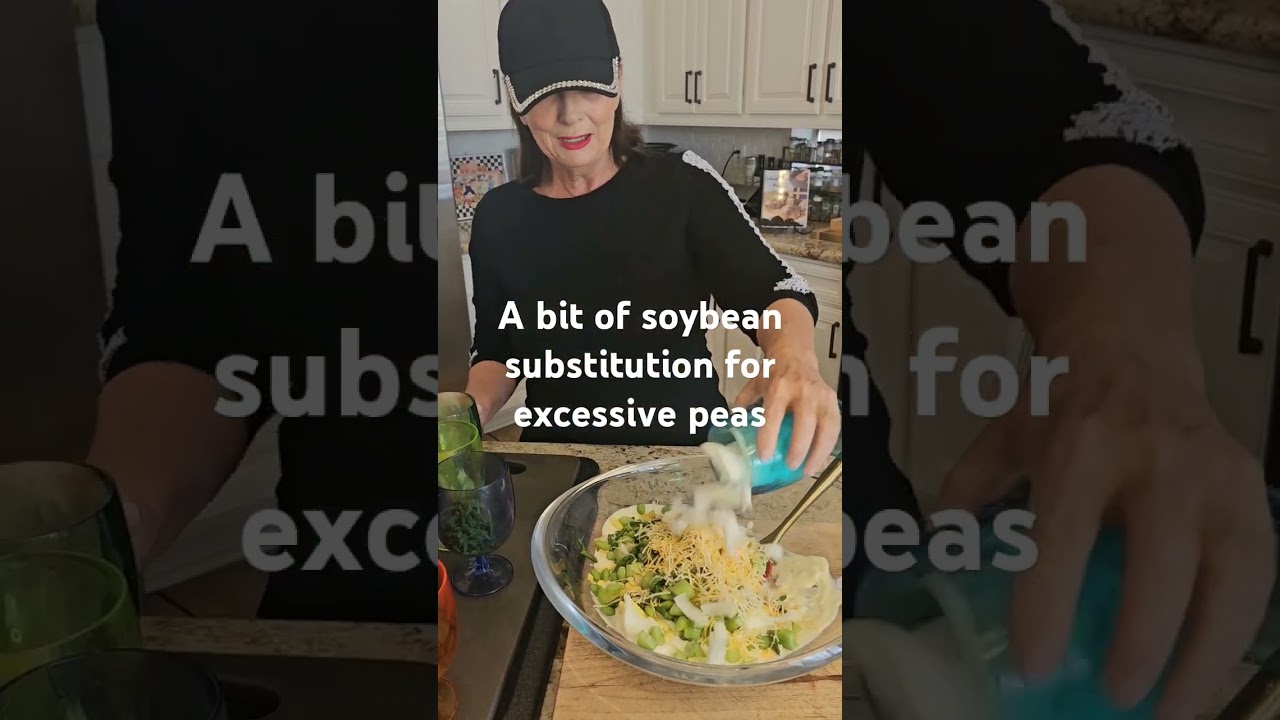
2 cups frozen peas or 1 cup frozen peas and one cup frozen shelled soybeans (my substitution).
6 slices uncured bacon, cooked, and crumbled
1 onion diced
1 /2 cup celery, diced
1/2 cup diced cheddar cheese
1 teaspoon salt
1/2 cup avacado mayonnaise
1 clove garlic ( rub salad bowl)
3 hard-boiled eggs, chopped
Optional: 1 cup of blanched asparagus tops (my addition).
Combine ❤️ together.
**Nutritional Profile of peas versus soybeans:**
– **Protein Content**: Soybeans are much higher in protein compared to peas. This makes them a great choice for vegetarians and those looking to increase their protein intake.
– **Fiber**: Both soybeans and peas are good sources of dietary fiber, aiding in digestion and promoting satiety.
– **Vitamins and Minerals**: Peas are rich in vitamins A, C, and K as well as several B vitamins. Soybeans also provide a good amount of vitamins, particularly vitamin K, and are high in essential minerals like iron and calcium.
**Culinary Uses:**
– **Flavor and Texture**: Soybeans have a nuttier flavor and a creamier texture, while peas are sweet and starchy. This makes them suitable for different types of dishes.
– **Forms**: Soybeans can be consumed in various forms, such as edamame, tofu, or soy milk. Peas can be eaten fresh, frozen, or dried and are often used in soups, salads, and side dishes.
**Health Benefits:**
– **Heart Health**: Both are considered heart-healthy options. Soybeans contain compounds called isoflavones, which may help lower cholesterol. Peas are a good source of antioxidants.
– **Weight Management**: Both options are low in fat and can be beneficial in a weight management plan due to their fiber content, helping you feel full.
In summary, while both soybeans and peas offer valuable nutritional benefits and can be versatile in the kitchen, they each bring unique flavors and textures to meals, making them suitable for different dishes.